
National Institute of the Republic of Serbia

ὅδε οἶκος, ὦ ἑταῖρε, μνημεῖον ἐστιν ζωῶν τῶν σοφῶν ἀνδρῶν, καὶ τῶν ἔργων αὐτῶν
Head of the Department: Dr Silvia Ghilezan
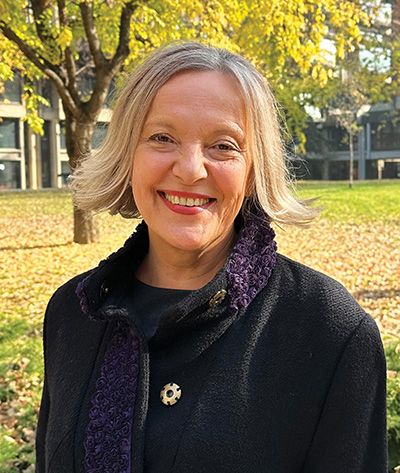 The Department of Mathematics is one of the founding divisions of the Mathematical Institute of SASA. Its principal role is to foster fundamental research in the field of mathematics. Sharing the values of the Institute and the international mathematical community, the Department is committed to excellence in research and education, the popularisation of mathematics, the advancement of borderless research, the promotion of open science, and awareness of environmental impact.
Building on eight decades of research at the Mathematical Institute of SASA across all core areas of mathematics, the Department conducts cutting-edge research in fundamental areas and problems, as well as in emerging areas in mathematics arising from societal and technological developments. Research in the Department focuses on a comprehensive range of topics, including: mathematical logic (set theory, proof theory, modal and probabilistic logics, model theory, recursion theory, type theory), mathematical analysis (differential and integral calculus, differential and integral equations, functional analysis, geometric function theory, generalised functions, distributivity equations), algebraic topology (homology theory, stable homotopy theory, knot invariants, configuration spaces, topological combinatorics, manifolds), algebra (theory of Lie groups, theory of group actions, automorphisms of free groups, algebraic structures, representation theory, combinatorial games), discrete mathematics (graph theory, spectral graph theory), category theory, differential geometry, combinatorics and combinatorial geometry (additive combinatorics), operations research, mathematical physics, complex systems (generalised entropies), history and philosophy of mathematics, mathematical aspects of music theory, and didactics of mathematics.
As a fundamental discipline, mathematics finds applications across other branches of science. In view of these interconnections, the Department promotes collaboration with other Institute departments, academic institutions in Serbia and abroad, as well as with industry.
The Department of Mathematics currently comprises around thirty researchers based in Belgrade, with branches in Novi Sad, Niš, and Kragujevac. It is run by Silvia Ghilezan as Head of the Department, with Zoran Petrić as Deputy Head and Luka Milićević as Secretary. It builds upon the research results achieved in fundamental and interdisciplinary projects at national and international levels. These projects have brought together a broad range of experts, early-career researchers, and PhD students in specialised teams that have successfully contributed to producing high-quality research, disseminating results, and fostering international collaboration. The project results have been published in leading journals, books, and monographs, and presented at prestigious international conferences. The implementation of these projects has also led to a significant number of successfully defended PhD theses.
In the past five years, among the Department numerous achievements, several published monographs and proceedings deserve special mention:
Probabilistic Extensions of Various Logical Systems (Springer, 2020);
Principles and Practice of Declarative Programming (ACM, 2021);
Types for Proofs and programmes (Leibniz–Zentrum für Informatik, 2022) and
A Hidden Harmony: Mathematics and Music through the Ages (Mathematical Institute of SASA, 2024).
Researchers from the Department are recognised as the most prolific authors within the Mathematical Institute, reflecting the Department’s leading role in advancing mathematical knowledge both nationally and internationally.
In the past five years, Department members have coordinated or participated in prestigious projects of the Science Fund of the Republic of Serbia, including:
Graphical Languages – GWORDS;
Approximate Algebraic Structures of Higher Order: Theory, Quantitative Aspects and Applications – A–PLUS;
Logical Foundations for Probabilistic Methods in Artificial Intelligence – PrometAI;
Advanced Techniques of Mathematical Aggregation and Approximative Equations Solving in Digital Operational Research – AT–MATADOR;
Model–theoretical and Ramsey–theoretical Phenomena in Mathematical Structures: Similarity and Diversity – SMART and
Artificial Intelligence for Trustworthy Block–Chain of the Science – AI4TrustBC.
At the international level, Department researchers have participated in projects funded through Horizon framework programmes, COST Actions, and bilateral collaborations, ensuring that their work is closely connected to state-of-the-art international research. International projects, either ongoing or recently completed, include:
Horizon frameworks (LeTSGEPs – Leading Towards Sustainable Gender Equality Plans in research institutions, TaRDIS – Trustworthy and Resilient Decentralised Intelligence for Edge Systems);
COST Actions (EUROProofNet – European Research Network on Formal Proofs (CA20111), EUGAIN – European Network For Gender Balance in Informatics (CA19122), SEADDA – Saving European Archaeology from the Digital Dark Age (CA 18128), G2NET – A network for Gravitational Waves, Geophysics and Machine Learning (CA17137)) and
Bilateral projects (ITEMICS – Information–theoretic Entropic Measures In Complex Systems – Theory And Applications (with Austria), STAFFS – Session Types: Applications, Foundations and Flow Security (with India), Discrete Morse theory and its applications (with Slovenia), Modern trends in chemical graph theory (with Slovenia), Multidimensional Persistence and Toric Topology (with Turkey)).
The Department members have held distinguished academic and research positions versity of Paris, the Free University of Berlin, the Mathematical Sciences Research Institute Berkeley, the Technical University of Lisbon, Ecole Normale Supérieure de Lyon, the University of Oregon, Abdullah Al Salem University, among others.
More than half of the Department’s researchers are early-career researchers who, together with PhD students, form the driving force of the Department, and their involvement is planned to increase further. Researchers who have obtained their PhD degrees abroad are endorsed to join the Department, following in the footsteps of colleagues who have recently joined after completing their doctoral studies at Cambridge University, the University of Gent, the Free University of Brussels, and Université Paris Diderot.
The Department supports the professional activities of its members, who participate worldwide as keynote, invited, and guest speakers, journal and book editors, programme chairs, programme committee members, reviewers for journals, conferences, and doctoral theses, and project evaluators, among other roles. These activities, in turn, significantly contribute to the internationalisation, dissemination, and promotion of the Department’s research and results.
The researchers of the Department are actively participating in more than ten seminars, some of which were founded as the core activity of the Mathematical Institute of SASA more than 65 years ago. The seminars are held on a regular basis at the Mathematical Institute of SASA in Belgrade and in the branches in Novi Sad, Niš and Kragujevac, supported by a video conferencing and recording system. The seminars chaired by Department members include the Mathematical Colloquium, which accommodates talks in all areas of mathematics, while more specialised seminars include the Mathematical Logic Seminar, the Probability Logic Seminar, the Mathematics and Music Seminar, the Seminar for the History and Philosophy of Mathematics, Mechanics and Astronomy, the Mathematical Analysis with Applications Seminar, and the Student Seminar. Occasionally, there are short courses and thematic seminars, which, through a series of lectures, systematically present contemporary research in related areas. The exchange of ideas is particularly intense in the Mathematics Colloquium, with a general mathematics audience, and at the Student Seminar, which, in an informal and friendly atmosphere, gathers young researchers whose early career interests revolve around mathematics, mechanics, computer science, and related fields.
In the past five years, the Department members have chaired, organised and hosted numerous conferences, workshops and other scientific events, including:
Geometry, Probability and Topology in Applications;
Approximate Algebraic Structures and Arithmetic Combinatorics;
Modern problems of analysis;
Conference Branislav Petronijević (1875–1954);
Kosta Došen — 70 years since birth;
Chinese–SouthEastEuropean Conference on Discrete Mathematics and Applications;
Joint Mathematical Meeting of Serbia and Montenegro and
AESIM–CIMPA School Introduction to Number Theory and Algebraic Curves.
The Department regularly supports the organisation of the annual events: Conference on Logic and Applications, Symposium on Operational Research, and Artificial Intelligence Conference.
Positive trends — such as publishing monographs with international scientific publishers, organising international conferences, delivering invited lectures, conducting research visits abroad, and engaging in other scholarly activities — are expected to continue, further confirming the international prestige of the Department researchers.
Through seminars and internships, the Department will continue to support students and early-career researchers, helping them promote and exchange ideas, develop scientific interests, and acquire the skills necessary for conducting research in mathematics, mechanics, computer science, and related fields. The Department also actively supports, and will continue to contribute to, Open Science and Citizen Science initiatives.
The Department of Mathematics aims to continue pursuing excellence in fundamental research across mathematics and its applications, while further strengthening interdisciplinary research at the interface of academia and industry.
|
|
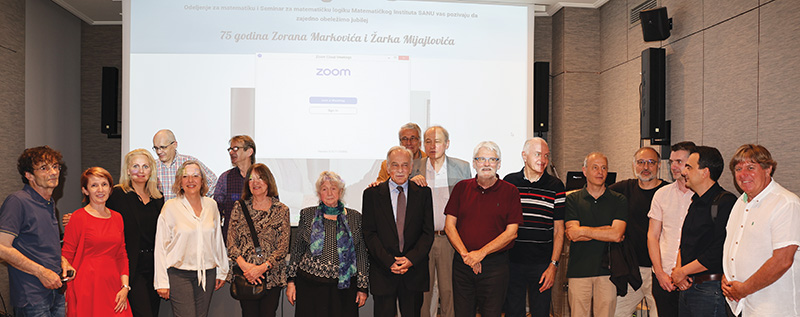
On the occasion of the 75th anniversary of Professor Zoran Marković and Professor Žarko Mijajlović |
Head of the Department: Dr Božidar Jovanović
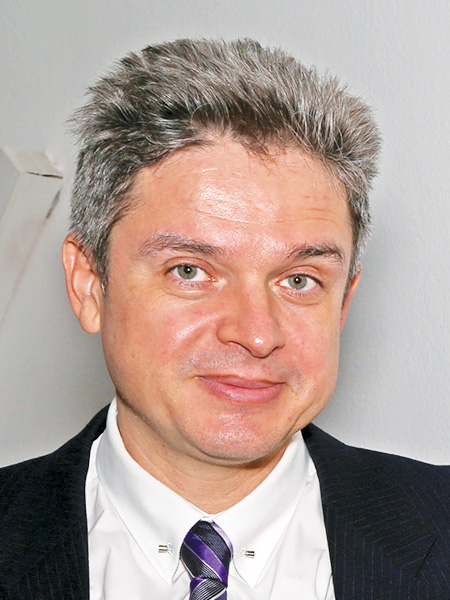 In 2021, three departments of the Mathematical Institute of SASA were established, mainly associated with the corresponding colloquia of the MISASA. The Department of Mechanics has grown out of the Mechanics Colloquium, founded in 1961.
There has been a strong group of researchers in mechanics since the very foundation of the Mathematical Institute. This group was led by one of the Institute’s founders and its first director, Academician Anton Bilimovič (1879–1970).
Currently, there are about 20 researchers in the Department of Mechanics, a third of whom are PhD students. It is run by Božidar Jovanović as Head of the Department, Ivana Atanasovska as Deputy Head of the Department, and Marijana Babić as Secretary.
Mechanics is said to be at the intersection of mathematics and physics and is closely related to the engineering sciences. As such, mechanics interacts closely with almost all areas of mathematics. Let us mention only geometry, mathematical physics, the theory of optimal control, dynamical systems, and astronomy – it was Professor Bilimovič who first translated Euclid’s Elements into Serbian. There are also applications in various engineering problems. Therefore, the research within the Department of Mechanics is closely intertwined with the research carried out in other Departments of the Mathematical Institute of SASA.
In addition to the Mechanics Colloquium, researchers of the Department are active in the following seminars: Mathematical Methods of Mechanics; CGTA (Combinatorics, Geometry, Topology, Algebra); Mechanics of Machines and Mechanisms – Models and Mathematical Methods; Geometry and Visualisation; Relativity Theory and Cosmological Models; Biomechanics, Bioengineering and Mathematical Biology; Differential Geometry, Continuum Mechanics and Mathematical Physics and other seminars, colloquia and departments of the MISASA. The Centre for Dynamical Systems, Geometry and Combinatorics, DSGC–synergy, is also part of the Department of Mechanics.
Special attention is devoted to the training and education of young researchers and in the last five years special courses, both international and national, have been organised:
Belgrade Summer School on Dynamics (2021);
Mathematical Methods of Mechanics (2022/23) and
Linear and Nonlinear Waves (2024).
Furthermore, mini-courses, such as Oriented matroids and Gale transform, Lie groups and sub-Riemannian geometry, and various popular and educational lectures within the MISASA seminars are also offered. The members of the Department are also actively engaged in the popularisation of mathematics and mechanics through the Institute’s activities: M3 – May Month of Mathematics and the Summer Internship.
The research carried out within the Department of Mechanics can be grouped into two broader areas of interest:
Classical mechanics, mathematical physics, integrable systems, geometry, and discretization;
Applied mechanics and engineering.
The research topics include: symplectic geometry, Lie groups, and algebraic geometry in mechanics; billiards; rigid body dynamics; nonholonomic mechanics; geodesic flows and sub-Riemannian geometry; matrix pencil completion problem; polyhedral products in combinatorics and topology and the theory of convex polytopes; mathematical analysis and applications in mechanics; fluid dynamics; dynamical systems and biomechanics; mechanics of materials and continuum mechanics; applied engineering mechanics.
Accordingly, two international series of conferences are organised by researchers from the Department:
GDIS – Geometry, Dynamics, and Integrable Systems (co-organised by the Steklov Mathematical Institute, Moscow) and
ICME – International Conference on Mathematical Modelling in Mechanics and Engineering.
The Mathematical Institute of SASA, through the Department of Mechanics and the Mechanics Colloquium, has also co-organised a number of conferences, including:
Serbian Congress of Theoretical and Applied Mechanics (Serbian Society of Mechanics);
Conference on Nonlinearity (Serbian Academy of Nonlinear Sciences) and
Mathematical Physics Meeting (Institute of Physics, Belgrade).
The members of the Department have established strong international collaboration and participate in both international (NSF, Simons Foundation – USA, Fundação para a Ciência e a Tecnologia – Portugal, Australian Research Council, COST Actions, bilateral projects with China and Bulgaria) and national projects (Science Fund of Serbia). The results of the Department are published in highly respected journals with a long tradition, such as Bulletin of the American Mathematical Society, Communications in Mathematical Physics, Russian Mathematical Surveys, Advances in Mathematics, Sbornik Mathematics, Archive for Rational Mechanics and Analysis, Proceedings of the London Mathematical Society, Philosophical Transactions of the Royal Society A: Mathematical, Physical and Engineering Sciences, thereby ensuring international visibility and a positive reputation for Serbian mathematics and mechanics.
|
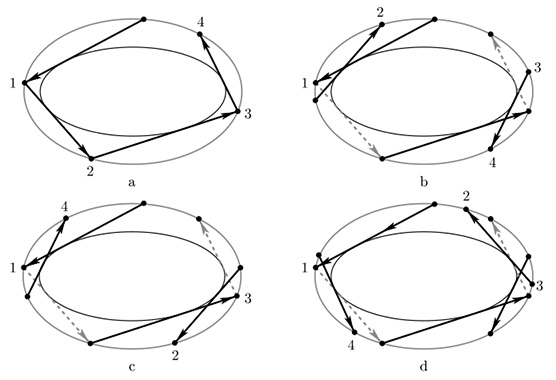
The Mathematical Institute SANU is internationally recognized for its significant results in the field of integrable billiards. Here we present Figure 1 from the recently published paper [V. Dragović, M. Radnović, “Magical Billiards: The Case of Elliptic Boundaries,” Sbornik Mathematics, 216:5 (2025), 83–105]: a standard billiard trajectory (a) and three trajectories of the magic billiard with the same initial segment: (b) flipping over the long axis; (c) flipping over the short axis; (d) the halfturn around the centre. In each case the consecutive points of impact with the boundary are numerated |

V. Dragović, M. Radnović, Magic billiards: the case of elliptic boundaries, Sbornik: Mathematics, 2025, Volume 216, Issue 5, 654–673

V. Dragović, M. Radnović, Magic billiards: the case of elliptic boundaries, Sbornik: Mathematics, 2025, Volume 216, Issue 5, 654–673

B. Jovanović, Affine Geometry and Relativity, Foundations of Physics, Volume 53 (2023) 60 (29pp).

B. Jovanović, Affine Geometry and Relativity, Foundations of Physics, Volume 53 (2023) 60 (29pp).

V. Dragović, B. Gajić, Orthogonal and Linear Regressions and Pencils of Confocal Quadrics, Statistical Science, 2025, Vol. 40, No. 2, 289–312.

V. Dragović, B. Gajić, Orthogonal and Linear Regressions and Pencils of Confocal Quadrics, Statistical Science, 2025, Vol. 40, No. 2, 289–312.

M. Timotijević, R. Živaljević, F. Jevtić, Polytopality of Simple Games, Experimental Mathematics, 2025, 34(3), pp. 432–445.

M. Timotijević, R. Živaljević, F. Jevtić, Polytopality of Simple Games, Experimental Mathematics, 2025, 34(3), pp. 432–445.

V. Heu, N. Joshi, and M. Radnović, Global Asymptotics of the Sixth Painlevé Equation in Okamoto’s Space, Forum of Mathematics Sigma, 2023, 11, e17.

V. Heu, N. Joshi, and M. Radnović, Global Asymptotics of the Sixth Painlevé Equation in Okamoto’s Space, Forum of Mathematics Sigma, 2023, 11, e17.

T. M. Atanacković, M. Janev, S. Pilipović, Restrictions in a distributed complex fractional order linear constitutive equations of viscoelasticity, Physica D Nonlinear Phenomena, 2023, 456, 133917.

T. M. Atanacković, M. Janev, S. Pilipović, Restrictions in a distributed complex fractional order linear constitutive equations of viscoelasticity, Physica D Nonlinear Phenomena, 2023, 456, 133917.

T. Vrećica at al, Observations of Strongly Modulated Surface Wave and Wave Breaking Statistics at a Submesoscale Front, Journal of Physical Oceanography, 2022, 52(2), pp. 289–304.

T. Vrećica at al, Observations of Strongly Modulated Surface Wave and Wave Breaking Statistics at a Submesoscale Front, Journal of Physical Oceanography, 2022, 52(2), pp. 289–304.

D. Karličić, M. Cajić, S. Paunović et al, Non-reciprocal wave propagation in time-modulated elastic lattices with inerters, Applied Mathematical Modelling, Vol. 117 (2023) 316–335.

D. Karličić, M. Cajić, S. Paunović et al, Non-reciprocal wave propagation in time-modulated elastic lattices with inerters, Applied Mathematical Modelling, Vol. 117 (2023) 316–335.

I. Atanasovska et al, Biomimetics Design of Tooth Root Zone at Cylindrical Gears Profile, Biomimetics, Vol 8(3) (2023) 308.

I. Atanasovska et al, Biomimetics Design of Tooth Root Zone at Cylindrical Gears Profile, Biomimetics, Vol 8(3) (2023) 308.
Head of the Department: Dr Andreja Tepavčević
 The Department of Computer Science of the Mathematical Institute of SASA traces its origins to the purchase of an IBM 360 computer in 1968, which at the time was the most powerful machine in Belgrade. Computer science at the Institute initially developed as an extension of research in mathematical logic, while also promoting the use of mathematics as a tool for addressing applied research and development challenges. The Department of Computer Science is organisationally closely connected with the Computer Science and Applied Mathematics Colloquium, which was founded in 2012. The Colloquium was founded on a series of achievements, including successful fundamental research projects, advances in technological development, specialized projects commissioned by state and economic institutions in Serbia, as well as international collaborations. By way of illustration, the following projects were carried out:
Mathematical Logic, Combinatorics and Information Processing: Fundamentals and Applications of Computing (1996–2000);
New Methods in Cryptology and Information Processing (2006–2010);
Development of New Information and Communication Technologies, Using Advanced Mathematical Methods, With Applications in Medicine, Telecommunications, Energy, National Heritage Protection and Education (2011–2019).
As the Institute celebrates its 80th anniversary, the Department of Computer Science brings together some thirty researchers, including more than 10 PhD students. It is run by Andreja Tepavčević as Head of the Department and Lazar Velimirović as Deputy Head of the Department.
The people from the department are building on past achievements while expanding into new areas of research and application, with a strong focus on the following fields:
Security and privacy in the digital space and blockchain technology;
Optimisation techniques;
Parallelisation of algorithms;
Machine learning and decision theory;
Natural language processing
Selected mathematical methods of interest for computing;
Digitisation of our cultural, historical, scientific, and educational heritage with applications;
Geoinformation systems;
Implementation of IT retraining programmes in Java and Python.
Members of the Department have published more than 650 scientific articles, most of which appeared in leading international journals. According to Scopus, these works have been published more than 8,600 times in major international publications.
The department’s associates have also engaged in intensive international cooperation with institutions in China, Australia, the USA, Canada, Brazil, Italy, Spain, Switzerland, and many other countries from the European Union and the Western Balkans. More than two decades of cooperation with institutions in Japan, including the University of Tokyo and the National Institute for Advanced Industrial Science and Technology (AIST), is of special importance.
The basic achievements in the areas mentioned above are outlined below.
The Mathematical Institute of SASA recognized the growing importance of research in the field of cryptology in the early 1990s and was among the first academic institutions to implement basic research and technological development projects in this field. Research activities in the field of cryptology were later extended to information security, then to blockchain technology, and most recently to the synergy of machine learning, blockchain, and information security. In the field of cryptology and its applications to information security and privacy in the digital space, the main activities included the following:
Evaluation of the security of cryptographic techniques for information security and privacy;
Construction of cryptographic techniques for encryption and authentication with low implementation complexity that at the same time achieve high levels of cryptographic security and reduce system overhead caused by the application of cryptographic mechanisms;
Application of results from error-correcting codes to enhance the cryptographic security of encryption and authentication techniques;
Improving some decoding techniques using approaches developed in cryptology;
Advanced components and mechanisms for achieving security and privacy in the digital space.
In the field of blockchain technology, the main activities included the following:
Advanced techniques for blockchain technology, including (i) blockchain consensus protocols that allow flexibility in the selection of necessary resources for participants in public blockchain networks, and in particular in reducing the energy required for the operation of blockchain infrastructure, and (ii) distributed blockchain infrastructures;
The improvement of existing and the development of new specialized applications of blockchain technology.
Achievements in the field of security and privacy in the digital space and blockchain technology are presented in more than 300 references, including scientific articles in international journals, book chapters, collections of papers in international conferences, and various national publications, and include more than 40 technical solutions and 8 internationally recognized patents. These results have been cited more than 2000 times according to the Scopus database. As an additional illustration of the international recognition of the results, it is worth noting that Dr Miodrag Mihaljević, a member of the Department of Computer Science, has been included in the ranking list colloquially known as the “World’s Top 2% Scientists by Stanford University” for career achievements over the last five consecutive years.
The associates of the Department have also carried out extensive international cooperation for almost three decades, in projects with the European Union, Japan, the United States, India, Singapore and China, including, among the most notable, collaborations with the University of Tokyo and the National Institute for Advanced Industrial Science and Technology (AIST) in Japan, and the Shandong Computer Science Centre in China.
The most significant current projects include the following:
Application of Artificial Intelligence in Blockchain Technology (project of the Science Fund of the Republic of Serbia);
Advanced Techniques for Blockchain Technology and Information Security (a project funded by the Shandong Computer Science Centre of the Shandong Academy of Sciences, China);
Applications of Blockchain Technology in Telecom Systems (a project financed by Telekom Serbia).
The main activities of the group that is engaged in optimisation are aimed at the following directions: Modelling of optimisation problems; Development of methods for determining the optimal (exact) solution, which usually involves the application of an existing solver, such as CPLEX or Gurobi and their incorporation into the proposed algorithm, as well as the development of completely original methods based on branching and bounding, branching and cutting, and similar methodologies, which use information on the problem under consideration and incorporate it into the rules of the adopted methodology; Implementation of efficient heuristic and/or metaheuristic methods for determining an approximate high-quality solution (better than the currently best or one that deviates as little as possible from the known optimal solution) in the shortest possible time.
To solve a large number of combinatorial optimisation problems, some of the most well-known metaheuristics have been successfully applied:
Variable Neighborhood Search (VNS);
Tabu Search (TS);
Greedy Stochastic Adaptive Search Procedure (GRASP);
Bee Colony Optimisation (BCO) method;
Ant Colony Optimisation (ACO);
Genetic Algorithms (GA), and many others.
In addition to concrete implementations of the mentioned metaheuristics, the group is also working on their improvement, modification and hybridisation with the idea of increasing their efficiency when applied to complex problems and large instances.
The algorithms developed have been incorporated into a new consensus protocol for blockchain systems based on the Proof of Useful Work principle, within the project Application of Artificial Intelligence in Blockchain Systems (a project of the Science Fund of the Republic of Serbia).
As part of the conducted research, a comprehensive set of optimisation methods was developed, aiming to enhance the infrastructure and utilisation of electric vehicles (EVs), particularly in relation to urban contexts, through hybrid models combining the Analytic Hierarchy Process (AHP), fuzzy dynamic programming, the p-median method, and genetic algorithms. Multi-criteria decision-making systems were created to address technical and user-driven demands, from optimal routing and charging schedules to estimating the optimal numbers and locations of charging stations. Specific factors taken into consideration were location safety, access, power grid capacity, and user preferences, in addition to models being validated through real-world case studies. This multidisciplinary approach not only enables user-driven, customised planning but also offers new criteria for commercial fleet use, such as secondary grid regulation participation. This scientifically sound model is a contribution to research on smart EV infrastructure management by positioning optimisation methods close to the challenges and changing patterns of urban area use on the path toward sustainable mobility.
A major output of this research area is the book Multi–criteria Decision Making for Smart Grid Design and Operation, which focuses on the utilisation of multi-criteria decision-making (MCDM) approaches in the planning and operation of smart grids from the Society 5.0 perspective. The book offers a hands-on perspective on a variety of MCDM approaches as they apply to real-world case studies — from assessing the efficiency of smart grid projects to optimising electric vehicle charging schedules. The book clearly communicates the decision-making rationale in multi-criteria decision-making, various aspects of performance, and uncertainty in modern power systems, and is intended for researchers, energy professionals, system planners, policymakers, and other stakeholders engaged in smart grid development.
Optimal utilisation of available computing resources is of great importance for efficiently solving various problems, not only in mathematics and other sciences, but also in practice. Activities in algorithm parallelization began with the acquisition of transputer boards in the late 1980s. Among the more significant projects developed on transputers, we highlight the finding of new prime numbers and the calculation of kinematic and dynamic models of robots. At the beginning of the 21st century, the first IBM cluster arrived, and shortly after, others that were part of the wider AEGIS grid network. They were, among other things, intensively used for the parallelization of metaheuristic methods, as well as hybrids between metaheuristics and exact optimisation methods. In addition to standard multi-core and many-core multiprocessor systems, the Mathematical Institute of SASA also has a Maxeller Field–Programmable Gate Array (FPGA) board with over 2000 arithmetic-logic units that operates on the principle of data-flow operations.
The main activities have been directed towards exploring the possibilities for applying machine learning algorithms in electric power and telecommunication systems. The application of machine learning algorithms in these areas contributes to technological progress and a simpler transition to Industry 4.0, with a focus on environmental protection, mitigation of climate change, reducing electricity consumption and optimising the operation of the systems under consideration. In addition, this research contributes to a smoother transition from fossil to renewable energy sources and the preservation of sustainability. Machine learning models in the field of sustainability also contribute to the monitoring and control of factors influencing climate change, such as pollution, environmental footprint, and available biocapacity.
machine learning models have been developed to anticipate how factors such as education, energy sector developments and environmental conditions shape the dynamics of digitisation — an essential foundation for driving the transformation towards a digital society. This research area has also been complemented by multi-criteria decision-making (MCDM) approaches, which support more informed decision-making and system evaluation in such evolving societies. Furthermore, machine learning has been applied in the field of image and text classification, and CAPTCHA research has been conducted in order to obtain the necessary scientific knowledge that enables safer development of Industry 4.0, which includes digitisation as a key component.
As part of our innovation activities, two significant projects with the support of the European Bank for Reconstruction and Development’s Green Innovation Voucher programme have been completed. The first project focussed on creating an Advanced Energy Management System (AdEMS), which is a digital platform allowing users to track and forecast their energy usage in real-time. Using advanced techniques of big data and data analytics, the system detects hidden patterns and correlations in energy consumption, contributing to optimised energy usage and cost reduction efforts, as well as greater integration of renewable energy sources. The second project, Smart Water Management System (SWaMS) was developed as an entirely novel solution to address challenges of water utilities in Serbia and the region more broadly. This system uses artificial neural networks for failure prediction and real-time data analysis that leads to operational optimisation of the infrastructure, reduction of water losses, improved energy efficiency, and better decision-making accuracy. This leads to a longer-term, cost-effective, and sustainable solution for utility companies and their stakeholders in the water management domain as a whole.
Research is also being conducted on applying reinforcement learning to the construction of new mathematical objects and on surrogate optimisation for computationally expensive numerical simulations. This work is carried out within the project “Lazy walk counts and the spectral radius of threshold graphs,” funded by the Science Fund of the Republic of Serbia.
The MISASA has recently initiated research in Natural Language Processing (NLP), opening a new and dynamic field within its scientific activities. As one of the most rapidly developing and widely applied areas of computer science, NLP introduces fresh perspectives and opportunities for innovation.
Current activities include:
Digitisation of historical texts: the development of algorithms and models for processing old periodicals and other cultural materials, thereby creating extensive and diverse language resources in Serbian;
Information extraction from medical texts: the design and implementation of pipelines for named entity and relation extraction to support a deeper understanding of scientific publications, medication instructions, and hospital discharge summaries;
Sentiment analysis for psychology research: the implementation of classifiers for analysing online resources relevant to social listening, user profiling, and well-being assessment.
With a strong focus on health and psychology, the NLP group collaborates with the Faculty of Pharmacy and the Faculty of Medicine (University of Belgrade), the Faculty of Philosophy (University of Novi Sad), as well as other NLP groups in Serbia and civil society organisations that promote the ethical and responsible development of AI and NLP.
From June 2024 to June 2025, in partnership with the National Library of Serbia, the NLP group participated in the GovTech programme supported by the Innovation Fund of the Republic of Serbia. The team implemented the project Digitisation of Textual Cultural Heritage, whose results and innovations have been recognized by the UNDP’s Local Language Acceleration programme.
In addition, the group is involved in clinical language modelling for patients with Alzheimer’s disease and contributes to broader dementia research through the project Data Story About Dementia, carried out with the Complexity Science Hub in Vienna as part of Bilateral Cooperation with the Republic of Austria 2024–2026.
The current research in this domain began as basic research in the field of algebra, especially universal algebra, lattice theory, and ordered set theory. It started with dealing with the problem of the representation of algebraic lattices via a lattice of weak congruencies. Later, research on lattice-valued fuzzy sets and fuzzy logic and applications in various fields commenced. Omega-algebraic structures are now in focus, which enable the observation of approximate identities and the solution of approximate equations. This is directly related to the closure systems on the lattice of weak congruencies of the initial algebra, by taking the factor algebra that fulfills the required identities. One of the important applications in this framework is the approximate solution to linear equations and systems of equations, which can be applied in various fields, and more recently in digital forensics, which is associated with COST action CA17124 – Digital forensics: evidence analysis via intelligent systems and practices. Research within Omega-algebras and related topics has resulted in the publication of more than thirty papers in the world’s leading journals in these fields, including Information Sciences, Fuzzy Sets and Systems, Soft Computing, International Journal of Computational Intelligence Systems, Kybernetika, the International Journal of Fuzzy Systems, and others. Currently, the researchers are working on the project “Advanced Techniques of Mathematical Aggregation and Approximative Equations Solving in Digital Operational Research,” financed by the Science Fund of the Republic of Serbia.
The goal of these activities, which rely on numerous projects and experience gained over nearly 40 years, is to develop a comprehensive and multi-layered heritage digitisation system. The system encompasses several interconnected processes, from developing digital catalogs and converting analog materials into digital form, to standardized documentation and preservation of digital objects. In parallel, the infrastructure of software tools and solutions intended for various types of processing of digitised materials is being developed, enabling the long-term sustainability, precision, and uniformity of digitisation procedures. Particular emphasis is placed on the long-term preservation of digitised materials, as well as on the development and interconnection of the software and physical network of information systems intended for managing digital content.
The digitisation projects carried out by the Mathematical Institute of SASA hold significant social importance – they preserve cultural heritage, increase its accessibility, enable new forms of education, stimulate the development of research in digital humanities, and strengthen cooperation between scientific and cultural institutions. This lays the foundations for future generations of digital repositories, virtual museums, and platforms to be used in the scientific, educational, and cultural systems of Serbia and the wider region.
Building upon a standardized technical and multimedia base developed over several decades, the Institute has established close cooperation with cultural institutions and scientific organisations both in Serbia and abroad, as exemplified by the signing of a memorandum of understanding with the United Nations Development Programme (UNDP). Multidisciplinary project teams – using 3D scanners, drones, photogrammetry, and other modern technologies and devices developed, acquired, and applied by the Institute – have worked at numerous locations across Serbia, including monasteries in Kosovo and Metohija, Studenica, Sopoćani, Rača and Mileševa, monuments in Sombor, Bač, Knjaževac, Gornji Milanovac, Pirot, Bajina Bašta, Belgrade, Novi Sad, and Niš. In the past decade, with the support of the Ministry of Culture, projects for digitising several hundred movable and immovable cultural objects have been implemented in Novi Pazar, Arilje, the Rudnik-Takovo region, the Museum in Smederevo, Aleksinac, the Gallery of Matica Srpska, etc.
A significant part of these activities includes the creation of multimedia presentations of digital content, enabling modern interpretation, promotion, and broad application of publicly available digitised cultural heritage for scientific use, education, and more. Almost all processed digitised materials are freely accessible through the Institute’s website. In particular, in cooperation with our colleagues from Niš, brought together in the ARhiMeda group founded in 2012, more than 50 mobile applications have been developed. The Institute for the Advancement of Education has recommended these applications for use in the curricula of primary and secondary schools. Since 2023, these activities have continued through the project “Development of Software Tools and Multimedia Technologies for Digital Presentation, Preservation, and Management of Cultural Heritage” conducted together with the Institute of Mathematics and Informatics in Sofia, within the framework of joint research projects of the Serbian and Bulgarian Academies of Sciences. The goal of this project is the development of innovative software solutions for mobile and web-based services for the interactive presentation of digitised heritage.
The Department of Computer Science has recently started a new research direction focussed on the application of Geoinformation Systems (GIS) in the energy sector and urban sustainable development. This new line of research has produced over 10 scientific publications. This body of work also incorporates GIS with Multi-Criteria Decision-Making (MCDM) methods and augmented reality technology to enhance theoretical and practical decision support.
Chairperson: Dr Zoran Petrić
 Since the founding of the Mathematical Institute of SASA in 1946, lectures in mathematics and mechanics were held within Veće Matematičkog instituta (Scientific Committee of the Mathematical Institute) on a regular basis until 1961. A seminar that grew out of Veće is the Mathematics Colloquium (initially the Colloquium for Mathematical Analysis, and later the Colloquium for Theoretical Mathematics).
The chairmen of these seminars of the Mathematics Colloquium were: Borivoje Rašajski, Đuro Kurepa, Stanimir Fempl, Slaviša Prešić, Žarko Mijajlović, Bogoljub Stanković, Rade Živaljević and Stevan Pilipović.
The Mathematics Colloquium is a general mathematical seminar whose role is to organise talks aimed at a broad audience, with particular emphasis on young mathematicians. Together with the Mechanics Colloquium and the Computer Science and Applied Mathematics Colloquium, it carries broad responsibility for shaping the scientific programme at the Mathematical Institute of SASA, tailored to all mathematical centres in Serbia.
During the last five years, 142 talks have been delivered at the colloquium. Among the foreign speakers, the following were guests at the colloquium: Nikolai Erokhovets, Mehmetcik Pamuk (December 2020), Andras Joysef Tobias (April 2021), Ioana-Claudia Lazar (June 2021), Jim Stasheff (October 2021), Luca Ghidelli (November 2021), Krzysztof Krupinsky (December 2021), Reihane Zoghifard (February 2022), Gyula Katona (May 2022), Semra Pamuk, Tane Vergili, Karl Sigmund (September 2022), Frol Zapolsky (November 2022), Ivan Limonchenko (December 2022), Darji Udayan (March 2023), Edeghagba Eghosa Elijah (April 2023), Alexey Semenov (June 2023), Miklos Simonovits (November 2023), Matteo Verzobio (December 2023), Nikolai Tiurin, Lev Beklemishev (April 2024), Adam Skalski, Jeffrey Bergfalk (June 2024), Michael Benedikt (July 2024), Zoltan Vidnyansky, Ying Zhang (September 2024), Stanislav Speranski, Margaret Bayer (October 2024), and Stephan Klaus (December 2024).
|
|
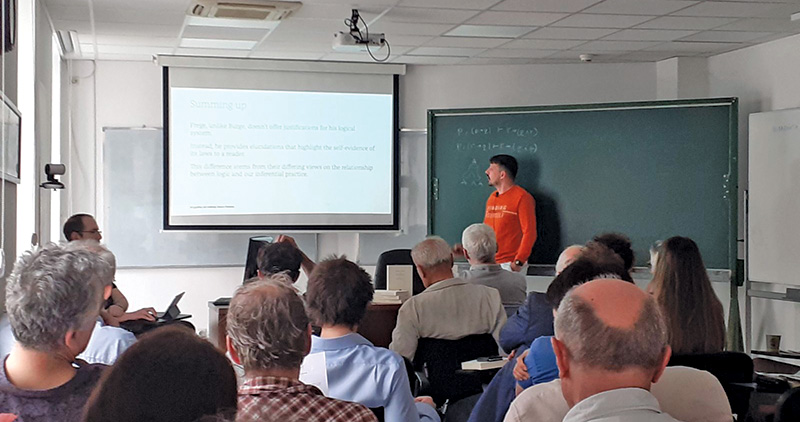
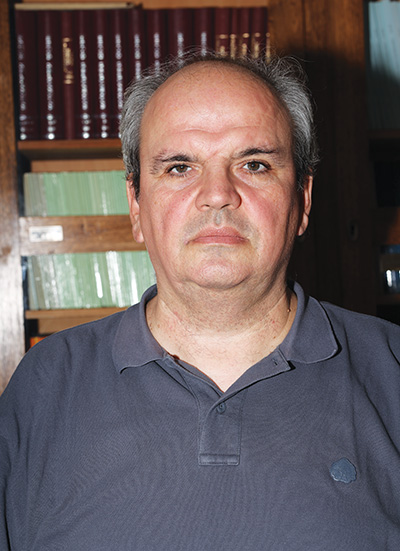
Lecture by Prof. Dr Miloš Adžić at the meeting of the Department |
The Mathematics Colloquium is a co-founder of the series Mihailo Petrović Alas Lectures, whose aim is to promote young Serbian mathematicians who have completed part of their education abroad by offering them an opportunity to share their knowledge with colleagues in Serbia. The first invited speaker in this series was Luka Milićević, who delivered a one-semester course (Spring 2019) entitled Additive Combinatorics. The second invited speaker of this series was Boriša Kuzeljević, who delivered a one-semester course (Spring 2023) entitled An Introduction to Independence Proofs.
Chairperson: Dr Borislav Gajić
 The Mechanics Colloquium is one of the historic colloquia of the MISASA. Its formal and fundamental role in the organisational structure of the Institute has evolved over the past eight decades, in step with changes in the Institute itself. One of its most prominent hallmarks and its most important public activity has been the organisation of research talks in mechanics.
The Mechanics Colloquium has earned its reputation as one of the most prestigious regular scientific meetings in the broad field of Mechanics, with the longest continuous tradition nationwide. Since the establishment of the MISASA in 1946, there has always been an important group of researchers in the field of mechanics, whose first leader was the founder and the first director of the MISASA, Academician Anton Bilimovič (1879–1970).
Up to 1961, the seminar talks in the field of mechanics, including Theoretical Mechanics, Fluid Dynamics, Stability of Motion, and Astronomy, were part of the Mathematics Colloquium. According to Academician Konstantin Voronjec, Head of the Mechanics Colloquium in 1971, at the time of the 25th anniversary of the Institute, more than one hundred such talks were held. The Mechanics Colloquium was founded in 1961.By November 2025, there had been 1500 meetings. On average, 23 meetings with about four foreign speakers are organised each year.
The Mechanics Colloquium meets weekly, on Wednesdays at 6 pm, thus maintaining the tradition established in its earliest days. The main tasks of the Mechanics Colloquium include:
Organisation of weekly lectures, which range from expository talks in pure and applied mechanics to reports on original research results;
Organisation of the public presentation and evaluation of scientific projects supported by the Ministry of Science;
Support and organisation of visits by foreign scientists;
Organisation and support of workshops, mini-conferences, presentations of books, software, video lectures, etc.;
Monitoring of seminars and other research activities in the field of mechanics within the Institute.
Currently, the Head of the Mechanics Colloquium is Dr Borislav Gajić, and Andrijana Dekić is the Secretary of the Colloquium.
In the period 1961–1965, the Mechanics Colloquium was headed by Academician Tatomir P. Anđelić (1903–1993) and Prof. Danilo Rašković (1910–1985). From 1965 to 1973, the Head of the Mechanics Colloquium was Academician Konstantin Voronjec (1902–1974); from 1973 to 1984, Prof. Vlatko Brčić (1919–2000); from 1984 to 2000, Prof. Veljko Vujičić (1929–2020); from 2000 to 2006, Academician Vladan Đorđević; from 2006 to 2010, Academician Teodor Atanacković; from 2010 to 2012, Prof. Katica Stevanović Hedrih; from 2012 to 2016, Prof. Vladimir Dragović, and from 2016 to 2025, Prof. Božidar Jovanović.
In the period 1975–1994, the Secretary of the Mechanics Colloquium was Dr Dragi Radojević (1947–2015). From 1994 until 2010, the secretaries were Dr Borislav Gajić, Dr Božidar Jovanović, and Dr Milena Radnović; from 2010 to 2012, Dr Srdjan Jović, from 2012 to 2017, Dr Katarina Kukić, from 2017 to 2021, Dr Tatjana Jakšić Krüger, and from 2021 to 2023, Marijana Babić.
|
|
|
|
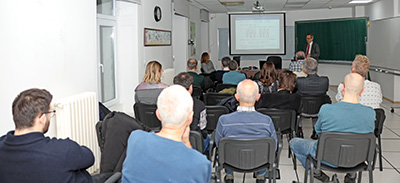
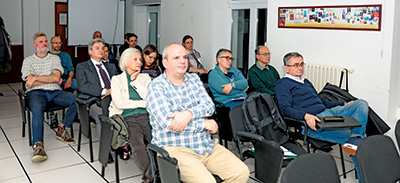
Lecture by Prof. Dr Vladimir Dragović at the meeting of the Department of Mechanics, 2025 |
||
Chairwoman: Professor Vera Kovačević Vujčić
The Computer Science and Applied Mathematics Colloquium was founded in 2012 with the aim of supporting the growing interest in computer science and its connections with mathematics.
The activities of the Colloquium include regular weekly lectures, organised through meetings of the following seminars:
Seminar on Computer Science and Applied Mathematics — Topics of the lectures range from reports on research in computer science and applied mathematics to computational studies and new software developments. The meetings are held on Tuesdays at 14:15 at the Mathematical Institute of SASA.
Seminar for Decision Making – Theory, Technology and Practice — The seminar addresses current research in the field of decision-making theory, with an emphasis on linking the theoretical and methodological framework with practical applications in different domains. The seminar is held on Thursdays at 13:00 on the premises of the Mathematical Institute of SASA in Niš (Pariske Komune Street).
Artificial Intelligence Seminar — Topics of the seminar range over logics and formal methods, reasoning, knowledge representation, natural language processing, machine learning, computational intelligence, artificial neural networks, and applications of artificial intelligence in different fields. The AI Seminar is held online on Wednesdays at 19:00.
In the period 2012–2025, the Computer Science and Applied Mathematics Colloquium has supported and participated in the organisation of several tutorials and conferences. The first activities in that direction were the organisation of tutorials “Dataflow Supercomputing” and “Data Mining from Social and Knowledge Networks,” held in 2013 by a group of experts from the University of Belgrade, Imperial College, Stanford University and the Mathematical Institute of SASA. In 2014, the Colloquium organised two courses on software verification, as well as an intensive course in parallel programming on the cluster. In 2015, it participated in the organisation of the minicourse “Existential Polytime and Polyhedral Combinatorics,” held at the Mathematical Institute of SASA by Professor Jack Edmonds.
In 2016, the Computer Science and Applied Mathematics Colloquium contributed to the celebration of the 70th anniversary of the Mathematical Institute of SASA by organising 16 invited lectures covering various areas of mathematics and computing. It also actively participated in the organisation of the international conference “Spectra of Graphs and Applications,” which was held from May 18–20, 2016, in honour of Professor Dragoš Cvetković on the occasion of his 75th birthday. In November 2018, the Computer Science and Applied Mathematics Colloquium organised a one-day meeting with six invited lectures in pure and applied mathematics in honour of the 70th birthday of Professor Gradimir Milovanović. Forty years of the scientific work of Professor Veljko Milutinović in computing were marked in March 2019 with a ceremonial meeting.
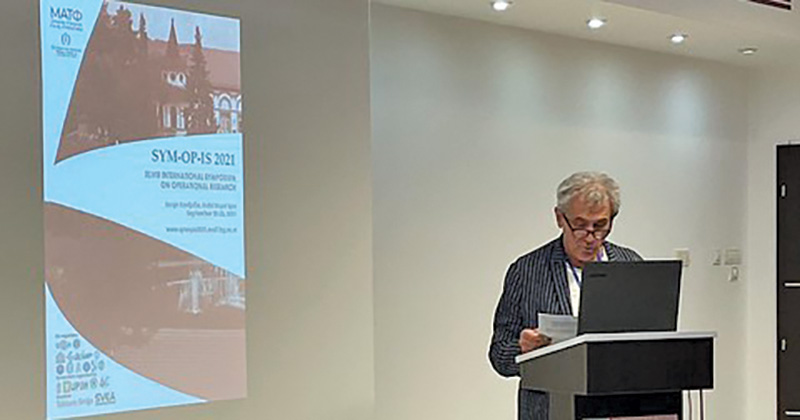
The Computer Science and Applied Mathematics Colloquium takes an active role each year in the organisation of the Symposium on Operations Research (SYMOPIS), while in 2015 and 2021 it was its principal organiser. It has also actively participated in the organisation of the International Conferences on Variable Neighborhood Search: ICVNS 2016, ICVNS 2017, ICVNS 2018, ICVNS 2019, ICVNS 2021, ICVNS 2022, ICVNS 2024 and ICVNS 2025. The Computer Science and Applied Mathematics Colloquium has supported the international conferences “Path to a Knowledge Society – Managing Risk and Innovation:” PaKSoM 2021, PaKSoM 2022, PaKSoM 2023, PaKSoM 2024 and PaKSoM 2025, the Virtual International Conferences on Science, Technology and Management in Energy: eNergetics 2015, eNergetics 2016, eNergetics 2017, eNergetics 2018, eNergetics 2019, eNergetics 2020, eNergetics 2021, eNergetics 2022, eNergetics 2023, eNergetics 2024, eNergetics 2025, as well as the Artificial Intelligence Conferences AI 2023, AI 2024 and AI 2025.
|
|
Prof. Dr Nenad Mladenović at the SYMOPIS 2021 conference |
One of the important activities of the Computer Science and Applied Mathematics Colloquium is a research internship programme for students interested in developing metaheuristic algorithms for optimisation problems. In the period 2020–2025, twenty-one students have successfully completed the internship program. Another activity of the Colloquium aimed at students is participation in the evaluation of high-level achievements of PhD, MSc and BSc students in the field of computer science and the awarding of the best of them. The Colloquium also promotes young researchers by giving them the opportunity to present their results at its seminars.
In the period 2012–2025, the guests of the Computer Science and Applied Mathematics Colloquium have been many world-renowned experts in the field of applied mathematics and computer science.
The head of the Computer Science and Applied Mathematics Colloquium is Professor Vera Kovačević Vujčić with Dr Tatjana Davidović as the deputy.
|
|
|
|
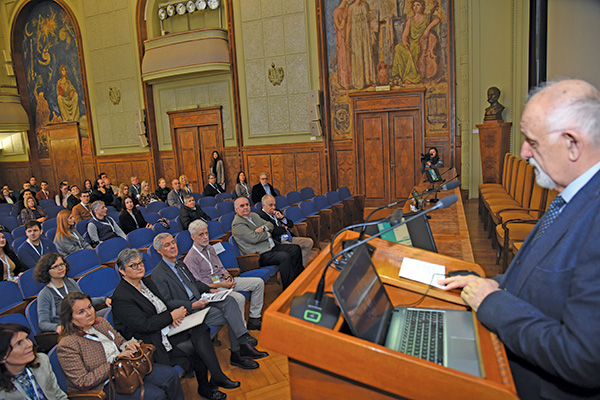
Opening of the conference dedicated to Artificial Intelligence at the Serbian Academy of |
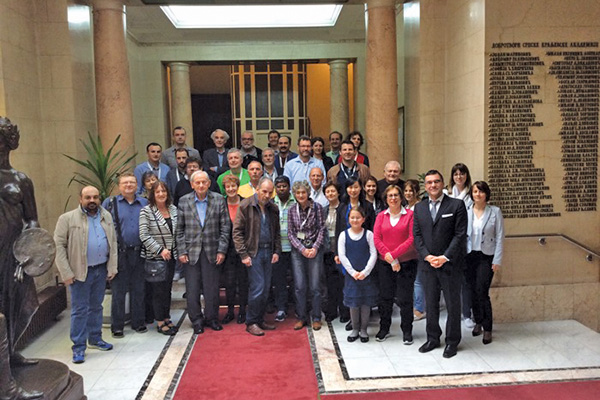
Participants of the conference Spectra of Graphs and Applications, 2016 |
Chairperson: Dr Predrag Tanović
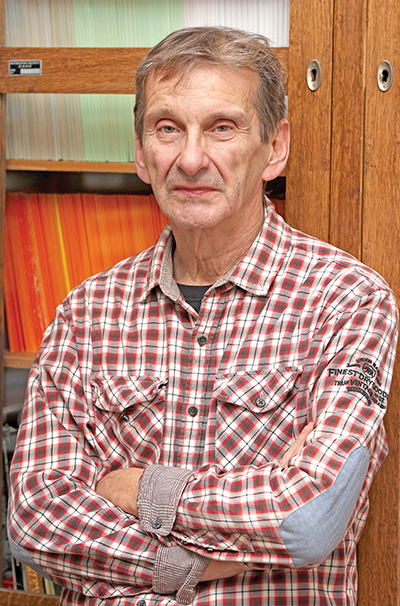 The study of mathematical logic in Serbia was initiated in the mid–1960s by a group of mathematicians and philosophers from the University of Belgrade. This work was continued at the Mathematical Institute of SASA in the form of a seminar established by Professor Slaviša B. Prešić. This seminar has been continuously active for more than 55 years. In the former Yugoslavia, the seminar had close relations with logicians from Zagreb for a long time. During the 1970s and 1980s, it was the fastest-growing mathematical group in Serbia, attracting a large number of graduate students. Some of them continued their studies at prestigious European and North American universities and went on to have outstanding research careers. Among them are invited speakers at the International Congress of Mathematicians (ICM), Dr Stevo Todorčević and Dr Ilijas Farah.
Seminar members are encouraged to give lectures on topics of general interest and present their own results. In particular, doctoral students working in logic are expected to give lectures on advanced topics related to their studies as well as to present their results. Occasionally, short courses are organised. Guest logicians from abroad are welcome.
The seminar covers topics in the foundations of mathematics and philosophy, numerous connections between logic and classical mathematical disciplines and computer science, the role of logic in the teaching of mathematics, etc. Traditionally, attention has been paid to all major areas of logic: set theory, model theory, proof theory, and recursion theory. For a long period of time, lectures in these areas were predominant, while in the last three decades, the number of lectures on topics in algebra, topology, combinatorics, and theoretical computer science related to logic has significantly increased.
Chairperson: Dr Nebojša Ikodinović
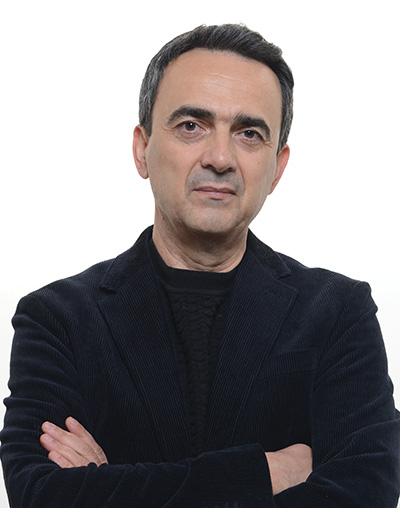 Dr Miodrag Rašković (1951–2025), Dr Zoran Marković (1948–2025), Dr Zoran Ognjanović, Dr Nebojša Ikodinović, and Dr Dragan Radojević initiated an informal seminar on the relationship between mathematical logic and probability theory, which was held weekly, at the Mathematical Institute of SASA, starting in 2004. Over time, many young researchers joined the group. Due to the growing number of seminar participants, primarily postgraduate students, as well as an increasing number of research results, the informal research seminar became an official seminar of the Mathematical Institute of SASA under the name Seminar on Probabilistic Logics. Since 2008, when it was established, the Seminar has been held regularly, typically on Thursdays. From 2008 to 2025, the head of the Seminar was Dr Miodrag Rašković.
The main goal of the Seminar is to serve as a forum bringing together all researchers interested in reasoning under uncertainty. Accordingly, the seminar covers a wide range of fields, including primarily mathematical logic and computational logic, as well as their applications in medicine, computer science, engineering, telecommunications, social sciences, etc. The Seminar particularly encourages students to prepare survey lectures on advanced topics and current research problems. The creative discussion that follows such lectures leads to a deeper understanding of the respective topic and often to new results.
Chairpersons: Dr Zoran Rakić and Dr Ivan Dimitrijević
|
|
|||
|
Dr Zoran Rakić |
Dr Ivan Dimitrijević |
The Seminar on Geometry was established in the second half of the 1980s at the Faculty of Mathematics, University of Belgrade. In the mid–1990s, it began to meet at the Mathematical Institute of SASA. The Seminar followed the dynamic development of the Chair of Geometry and was initiated by Prof. Dr Neda Bokan and Prof. Dr Novica Blažić.
The goal of the seminar Geometry and its Applications has always been closely tied to improving the quality of teaching geometry courses and promoting more intensive scientific research in geometry at universities in Serbia — particularly in differential geometry and its numerous applications.
Over the years, the Seminar has featured presentations of scientific papers by its members and numerous guests from Serbia and abroad, presentations of doctoral theses by younger colleagues prior to their defenses, as well as thematic lectures and advanced courses in various areas of geometry and its applications. More precisely, during this period, the Seminar has presented the results of about twenty doctoral dissertations in the field of geometry and related areas.
The work of the Seminar was closely linked with research projects of the Ministry of Science:
Differential Geometry and Applications (1992–2000) and
Geometry, Education, and Visualization with Applications (2000–2019).
During the existence of the latter project, the Seminar bore its name. The project leaders were Professors Neda Bokan and Novica Blažić (1992–2005), and Zoran Rakić (2006–2019). During this period, the Seminar was also led by Professors Mirjana Đorić, Stana Nikčević, Srđan Vukmirović, Miroslava Antić, and Ivan Dimitrijević.
Throughout all these years, the Seminar has presented a wide range of topics in geometry and related disciplines: Riemannian and pseudo-Riemannian geometry, the theory of submanifolds, left-invariant metrics on manifolds, Lie groups and algebras, holonomy groups, affine differential geometry, integrable systems, complex manifolds with additional structure, cosmological nonlocal models, Schwarzschild metrics, synthetic geometry, noncommutative geometry, p-adic and adelic quantum-mechanical systems and applications of p-adic numbers in biological systems, quantum groups, topology, computational geometry, and visualization of geometric objects and their applications in education.
For many years, the Seminar received significant support from Academician Mileva Prvanović and Professor Branko Dragović, who was a long-term collaborator and later became a member of the Seminar.
During this period, the members of the Seminar greatly improved the level and organisation of mathematical conferences, bringing them up to internationally recognized standards. Such conferences included: Workshop on Contemporary Geometry and Related Topics (2002 and 2005), as well as the series Geometrical Seminar, which began in the 1980s. Starting from the XVII Geometrical Seminar (Zlatibor, 2012), these conferences have reached a notable international level, gathering around 120–130 participants, of which about 80 were from abroad. The next conference in the series, XXIII Geometrical Seminar, is planned for 2026, also in Zlatibor. Members of the Seminar have also played an important role in organising international conferences and congresses both in Serbia and abroad, notably the series Mathematical Physics Meeting: School and Conference on Modern Mathematical Physics (2001–2024) — eleven conferences — and the series Conferences on Nonlinearity (2021, 2023, 2025).
|
|
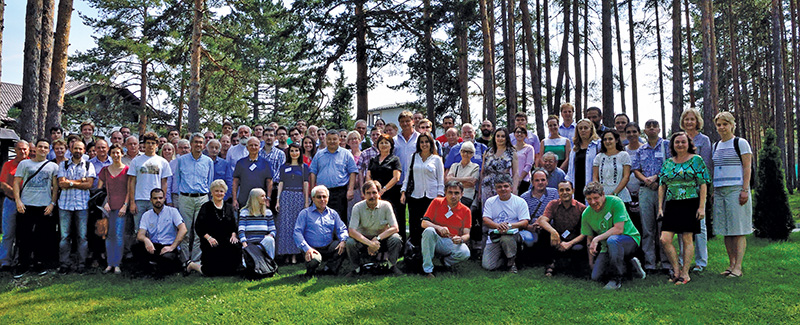
XIX Geometrical Seminar Conference, Zlatibor, 2016 |
Among the guests and friends of the Seminar, we would like to acknowledge the collaboration and contributions of colleagues from thematically related seminars: Vladimir Dragović, Božidar Jovanović, Borislav Gajić, Rade Živaljević, Đorđe Baralić, Ivan Limonchenko, Zoran Petrić, Miodrag Mateljević, Miljan Knežević, Marek Svetlik, Predrag Jovanović, Duško Borka, and Vesna Borka-Jovanović, as well as distinguished mathematicians from abroad, including: Emil Molnár, Peter Gilkey, Anatoly Fomenko, Bang-Yen Chen, Lieven Vanhecke, Alfred Gray, Masafumi Okumura, Dmitri Alekseevsky, Oldřich Kowalski, Louis Kauffman, David Blair, Mikhail Zelikin, Leopold Verstraelen, Udo Simon, Bernd Wegner, Graham Hall, Luc Vrancken, Marian Ioan Munteanu, Ivko Dimitrić, Stefan Ivanov, Ryszard Deszcz, Barbara Opozdа, Radu Miron, Josef Mikeš, Vladimir Balan, Yuri Nikolayevsky, Eduardo García-Río, Konrad Polthier, Andrey Mironov, Iskander Taimanov, Andrei Vesnin, Taras Panov, Vladimir Rovenski, Alexey Tuzhilin, Alexandr Ivanov, Dmitry Millionshchikov, Fedor Popelensky, Alexander Zheglov, Stefano Marchiafava, Fabio Gavarini, Stefano Trapani, Paola Matzeu, Salvatore Capozziello, Marisa Fernández, Nicolas Andruskiewitsch, Eduardo Hullet, Eberhard Malkowsky, Dmitry Polyakov, Yuri Nikonorov, Nikolay Tyurin, Ilja Gogić, and many others.
|
|
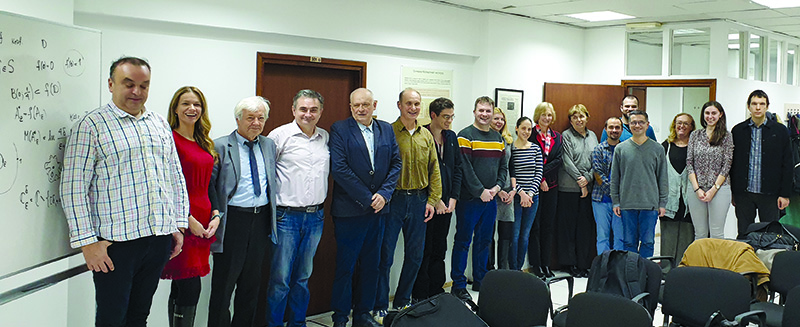
Group photo after the seminar held on 28 November 2019 |
We would like to take this opportunity to thank all members, guests, and friends of the Seminar, whose work and dedication to geometry — and to mathematics in general — have ensured its continuous existence for nearly forty years.
Finally, let us remember our dear colleagues who were members of the Seminar but are no longer with us: Novica Blažić, whose untimely passing in 2005 was a great loss for both the Seminar and the Chair of Geometry; Slavik Jablan, who passed away in 2015; Academician Mileva Prvanović, who left us in 2016 and Stana Ž. Nikčević, who passed away at the end of 2023.
Chairperson: Dr Rade Živaljević
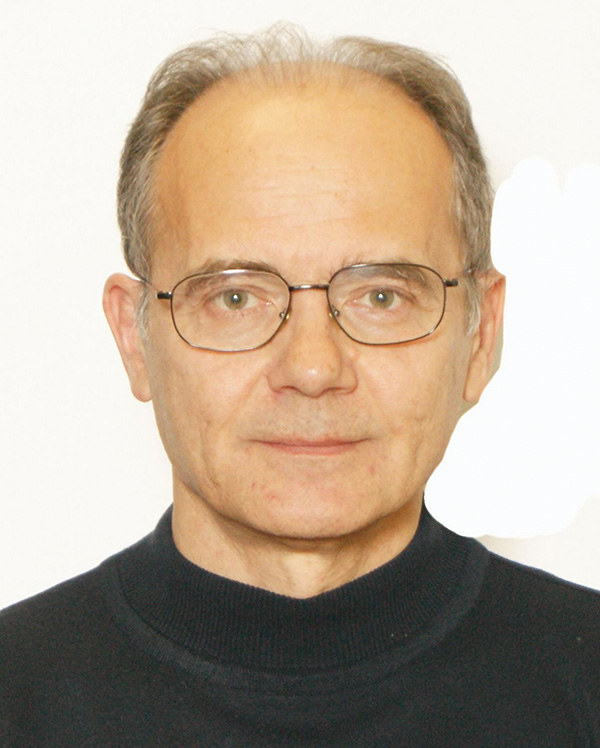 The Seminar on Combinatorics, Geometry, Topology, and Algebra (CGTA) was established around 1985 by a group of Belgrade mathematicians with diverse mathematical interests and specializations (originally under the name GTA–seminar).
The members of the founding group were Sava Krstić (MISASA), Aleksandar Lipkovski (Belgrade University), Aleksandar Vučić (Belgrade University), Siniša Vrećica (Belgrade University) and Rade Živaljević (MISASA).
From its inception, the seminar has served as a forum for disseminating mathematical ideas and introducing young mathematicians to research in:
Topological, geometric, and algebraic combinatorics;
Discrete, computational, and algebraic geometry;
Algebraic topology, with particular emphasis on applications to problems in discrete geometry and combinatorics.
Over its forty years of activity, the seminar has been a meeting place not only for domestic mathematicians but also for many distinguished foreign colleagues. Among them, we especially wish to acknowledge Imre Bárány, Victor M. Buchstaber, Herbert Edelsbrunner, Kiyoshi Igusa, Duško Jojić, Jiří Matoušek, Sergey Melikhov, Taras Panov, Yuri P. Solovyov, Svjetlana Terzić, Victor Vassiliev, Volkmar Welker, Günter M. Ziegler, and many others.
In addition to regular research talks, over the years the seminar, its thematic lecture series, and the associated CGTA courses have covered numerous topics, including: the theory of Lie groups, algebraic curves, vector bundles and characteristic classes, dihedral and cyclic homology, the theory of group actions, Borsuk–Ulam type theorems and their applications, discrete and computational geometry, automorphisms of free groups, hyperplane arrangements, stable homotopy theory, knot invariants, the theory of convex polytopes and algebraic geometry (toric varieties, Newton polyhedra), diagrams of spaces (Goresky–MacPherson type formulas), configuration spaces, invariants of three- and four-manifolds, toric topology and combinatorics, applied and computational algebraic topology (ACAT), and many others.
The seminar emphasises the interplay of ideas from different mathematical fields, affirming the unity of mathematics and its applications. In line with this orientation, the Centre for Dynamical Systems, Geometry and Combinatorics was created as a joint project with the Seminar on Mathematical Methods of Mechanics (MMM), founded by Vladimir Dragović.
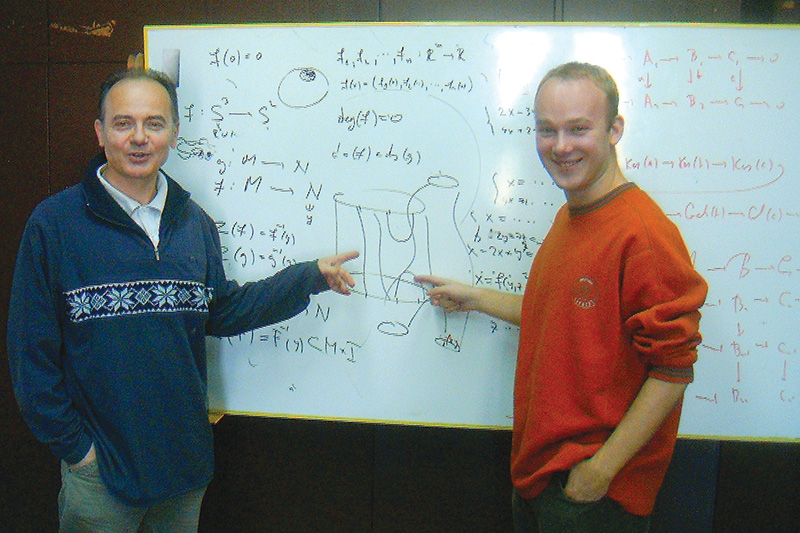
|
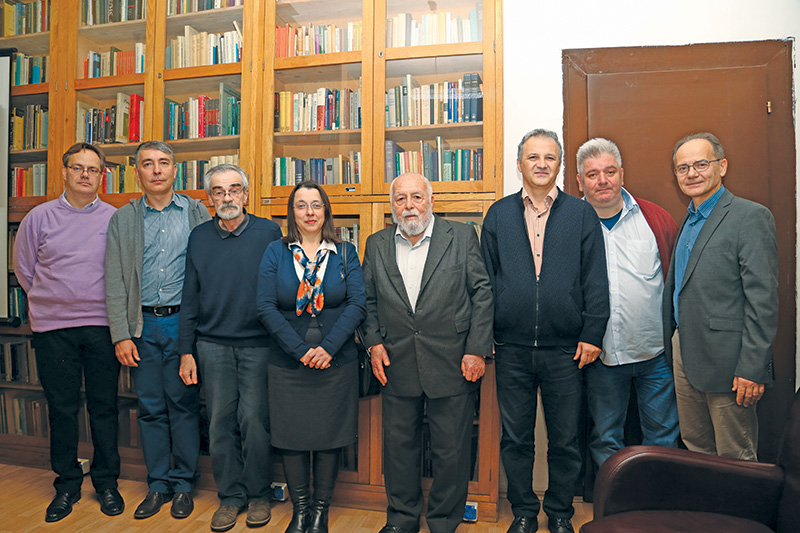
|
|
|
KGTA Seminar, 2009 (R. Živaljević, Đ. Baralić) |
Celebration of the 30th anniversary of the Seminar (KGTA) (V. Dragović, V. Grujić, K. Došen, S. Terzić, M. Marjanović, A. Vučić, D. Jojić, R. Živaljević) |
Chairperson: Dr Milan Božić
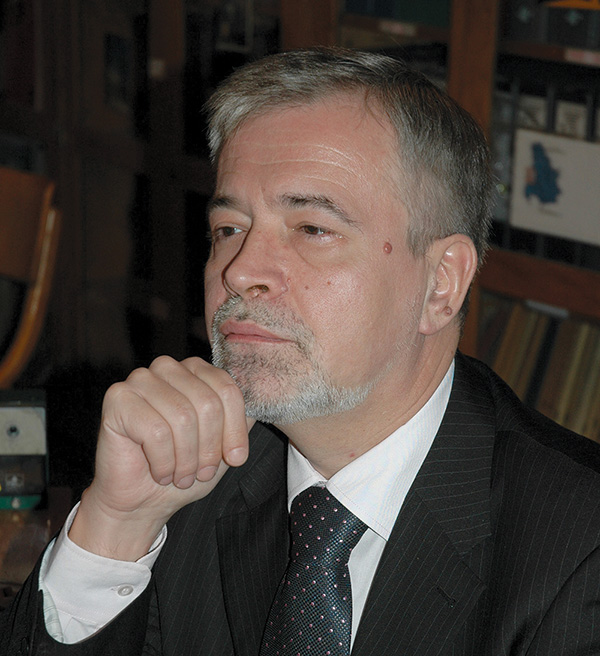 This Seminar was founded as a workshop on the history of Mathematics, with an emphasis on Mathematics in Serbia, around half a century ago, at the beginning of the 1980s. The first chairperson was Dr Dragan Trifunović, a prominent scholar in this field.
A decade later, at the beginning of the 1990s, Dr Rade Dacić became the chairperson.
Since 2002, the Seminar has been chaired by Dr Milan Božić. In that year, it was decided that the name should be changed to include Philosophy and sciences such as Mechanics and Astronomy, which are close to Mathematics and have been studied at the Mathematical Faculty of the University of Belgrade since the founding of the biggest and oldest University in Serbia.
As the scope of the Seminar has broadened, the participants and keynote speakers have grown in number and diversity of origin. This includes participants from almost all countries that emerged from the former Yugoslavia, as well as participants from many other countries around the world.
Currently, the Seminar convenes on Tuesdays at noon during the academic year and covers many interdisciplinary topics, combining, for example, methodology, education, and the popularization of science.
Chairperson: Dr Ljiljana Petrović
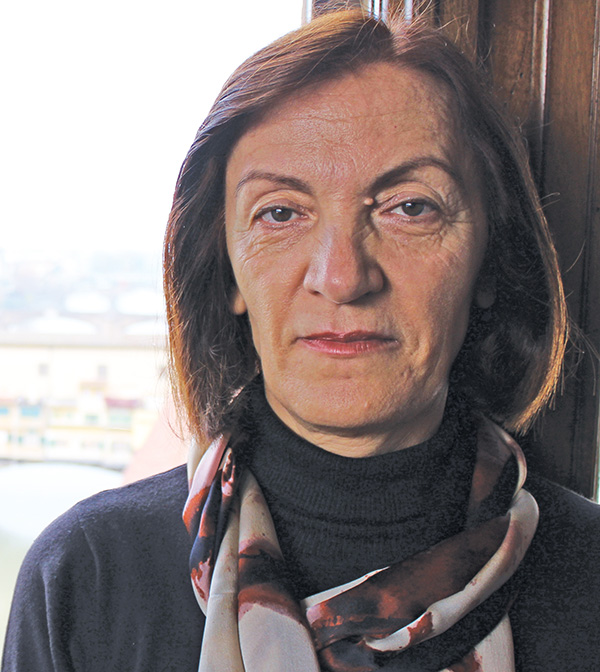 The Seminar was founded in 1996 under the name Stochastics. Regular meetings of the seminar were held until 2008. The co-chairs were Dr Svetlana Janković and Dr Slobodanka Janković.
In 2023, the name of the Seminar was changed to Stochastics with Applications. Meetings of the seminar are devoted to a wide range of topics, including probability, stochastic processes, stochastic calculus, stochastic differential equations and statistics, with applications in various areas such as artificial intelligence, mechanics, stochastic dynamical systems, complex systems, mathematical physics, economics, etc. The goal of this Seminar is to bring together researchers working in different areas where stochastic methods are applied and to strengthen interaction between mathematics and other scientific disciplines. The Seminar provides a forum for the presentation of results not only by established researchers but also by postdoctoral and PhD students.
Among the notable contributions to the Seminar, we would like to acknowledge those made by Persi Diaconis (Stanford University), Zoran Pop-Stojanović (Florida University), Jordan Stoyanov (Bulgarian Academy of Science), Michael Oberguggenberger (University of Innsbruck), Richard Kenyon (Yale University), Sandro Coriasco (University of Turin) and many others.
The Seminar meetings are held twice a month on Thursdays at 11 a.m. during the academic year. The lectures are recorded for the archive of the Mathematical Institute of SASA.
Chairperson: Dr Vesna Todorčević
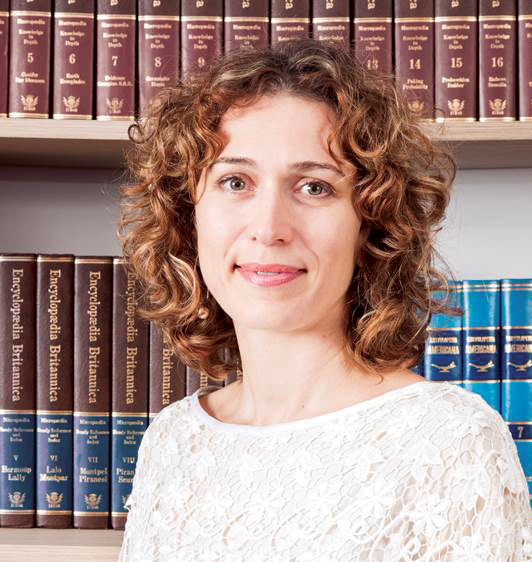 The Seminar Mathematics and Music was founded in 2018 and has since been held regularly by the Mathematical Institute of SASA in Belgrade. The lectures aim to present numerous, sometimes not so obvious, connections between mathematics and music, which have existed since the very beginnings of both disciplines, as well as relationships between mathematics and other branches of art and philosophical thought. In addition to the mathematical aspects of music theory, the topics presented have included, among others, the concepts of harmony, melody, rhythm, and algorithmic composition.
Drawing on the connections between mathematics, music, and computer science, the Seminar is also devoted to the popularization of mathematics. Moreover, through a series of lectures by musicians, writers and visual artists, it examines a variety of links between mathematics and other arts, thereby significantly broadening both the audience and the methodological frameworks employed. This thematic and methodological diversity, especially with regard to its diachronic approach, is clearly reflected in the consistently high attendance at the Seminar.
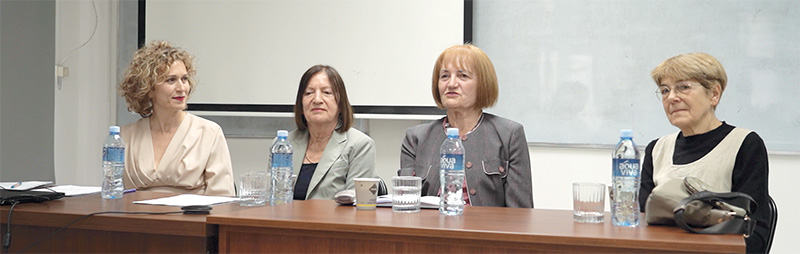
|
|
Panel within the Seminar Mathematics and Music: Women Pioneers of Mathematics in Serbia (from left to right: Prof. Dr Vesna Todorčević, Prof. Dr Neda Bokan, Prof. Dr Desanka Radunović and Prof. Dr Vera Kovačević Vujčić) |
The lecturers, as well as the participants of the Seminar, come from a very wide array of academic and artistic fields: they are mathematicians, musicologists and musicians, composers, computer scientists and programmers, philosophers and theologians, classicists and historians of science, visual artists and writers, ranging from students to established professionals. The sheer number of lectures — more 100 — and the professional diversity of their speakers attest to the intensity and ambitious academic goals of this Seminar.
We hope to continue and maintain the multidisciplinary character of the Seminar, which bears witness to the deep and enduring connections between mathematics and other realms of human creativity.
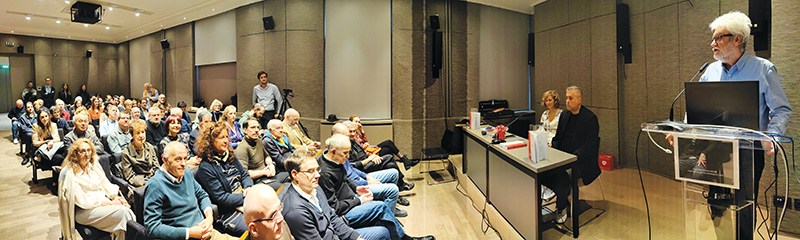
|
|
Promotion of the proceedings A Hidden Harmony: Mathematics and Music through the Ages on the occasion of the fifth anniversary of the Seminar Mathematics and Music, Mathematical Institute of the Serbian Academy of Sciences and Arts, 8 November 2024 |
Chairperson: Dr Luka Milićević
 The Student Seminar serves as a platform for students and more experienced researchers to connect, share their experiences and interests, and foster collaboration. Unlike seminars that focus on specific mathematical topics, the Student Seminar has a more general mission. The seminar aims to enhance students’ presentation and communication skills, familiarize them with academic practices, and help them identify research centres and groups aligned with their scientific interests. Although the Mathematical Institute of SASA had a well-established tradition of maintaining ties with students in Serbia and abroad even before establishing the Student Seminar, the seminar has significantly strengthened these ties. In addition, seminar contributors have actively participated in organising the event May, the Month of Mathematics, engaged in activities at the Petnica Science Centre, and taught at the Mathematical Grammar School in Belgrade. Since its inception in 2017, meetings of the Student Seminar at the Mathematical Institute of SASA have typically been held on Fridays around noon, just before the Mathematics Colloquium, the Institute’s main seminar. This scheduling has earned the Student Seminar its informal nickname “The Little Colloquium.” The seminar features talks by undergraduate, master’s, and PhD students, covering a wide range of topics in mathematics, computer science, mechanics, and their applications. Its primary goal is to support students in initiating their scientific work, offer additional academic training, facilitate the exchange of relevant information, and assist young researchers at the early stages of their careers.
 Throughout its existence, the seminar has hosted students from all mathematics departments in Serbia, as well as numerous students studying at various universities abroad. A key aspect of its mission is to cultivate scientific connections among young researchers. The Student Seminar also serves as a means through which the Institute supports former students of the Mathematical Grammar School who signed the Good Intentions Memorandum — students who previously took part in high school Olympiads in mathematics and computer science. Notably, at the end of 2023, a New Year gathering was held, gathering many students who had been involved in various seminar activities over the preceding period. The Student Seminar also features presentations by finalists for various Mathematical Institute Student Awards, which recognize the best PhD and master’s theses, as well as outstanding student papers in mathematics and computer science. These awards were established in 2017, while the award for the best high school thesis for students of the Mathematical Grammar School was first presented in 2018. The high school laureates also have the opportunity to give a lecture at the seminar. The evaluation committees consist of established scientists from the Mathematical Institute of SASA and university professors.
Since 2020, the Institute has been organising student research internships in mathematics, mechanics, computer science, and other fields covered by the Student Seminar. During these internships, students work on open problems under the guidance of experienced researchers from the Institute. The goal of these projects is to give students firsthand experience of scientific research and insight into the working environment of the Institute, while also familiarizing them with the Institute as a potential place to pursue their future academic careers.
Chairperson: Dr Vladimir Božin
 The Mathematical Analysis with Applications Seminar was founded in 2022 under the leadership of Vladimir Božin, with Bogdan Đorđević as secretary. The seminar showcases research results in analysis and its numerous applications in related fields.
The seminar focuses on topics in complex and harmonic analysis, quasiconformal mappings, matrix analysis, operator theory, dynamical systems, and functional and stochastic analysis. Applications in topology, Teichmüller spaces, quantum mechanics and quantum information theory have also been discussed in various invited lectures.
Participants are primarily researchers from the Mathematical Institute of SASA working in analysis, as well as members of the Departments of Analysis and Complex Analysis at the Universities of Belgrade and Niš. The seminar is also frequently conducted via online streaming, which enables the participation of international guests who are unable to deliver their lectures in person.
The seminar maintains close collaboration with the Complex Analysis Seminar at the Faculty of Mathematics in Belgrade, which has a long-standing tradition. Among its distinguished guests have been researchers who began their careers at that seminar thirty years ago, such as Vladimir Marković and Dragomir Šarić, with Šarić delivering the opening lecture at the Institute’s seminar in 2022.
Chairperson: Dr Marko Janev
 The Novi Sad Seminar of the Mathematical
Institute of SASA aims to promote collaboration between researchers from the Novi Sad branch of the MISASA and other researchers from the MISASA (Belgrade, Niš, Kragujevac) in the fields of mathematics, mechanics, and informatics. Additionally, its goal is to contribute to the visibility of the results achieved by these researchers. The seminar covers various topics within all the mentioned fields and their subfields.
The Novi Sad Seminar of the Mathematical
Institute of SASA aims to promote collaboration between researchers from the Novi Sad branch of the MISASA and other researchers from the MISASA (Belgrade, Niš, Kragujevac) in the fields of mathematics, mechanics, and informatics. Additionally, its goal is to contribute to the visibility of the results achieved by these researchers. The seminar covers various topics within all the mentioned fields and their subfields.
As presenters at the seminar, researchers from the MISASA are welcome, as well as all other researchers, both established and those who are just beginning their research careers, from both within the country and abroad, who wish to present their original results.
The seminar takes place once a month.
Chairperson: Dr Vladimir Dragović
 The everlasting connection between mathematics, mechanics, and physics has driven many fundamental ideas in mathematics during the last third of the 20th century. Inspired by this connection, the Seminar on Mathematical Methods of Mechanics was established at the MISASA in the spring of 1993 with the aim of encouraging more active and organised participation in these contemporary developments.
Let us highlight two principal initial tasks of the Seminar. The first one was to contribute to the organisation of postgraduate studies in these fields in cooperation with the Chairs of Geometry and of Mechanics of the Faculty of Mathematics in Belgrade. The second task was to organise, coordinate, and stimulate research, as well as to provide a forum for discussion and verification of original research results.
Most frequently, the subjects of talks have been integrability and nonintegrability of dynamical systems, symplectic geometry, Lie groups and algebras, qualitative analysis of differential equations, algebraic curves, etc.
The Seminar was initiated in 1993 by Vladimir Dragović, who has served as its chair since its inception. In 1994 and 2000, the duties of chairperson were performed by Nikola Burić (1959–2016) and Darko Milinković, respectively.
During the first few years, senior researchers Veljko Vujičić (1929–2020), Stevo Komljenović (1930–2020), and Rade Živaljević participated actively in the work of the Seminar. Four PhD theses have been completed within the Seminar (by Božidar Jovanović, Borislav Gajić, Milena Radnović, and Katarina Kukić), all under the supervision of Vladimir Dragović.
Over more than thirty years of its activity, the Seminar has organised many special courses:
Mathematical Methods of Mechanics by Vladimir Dragović in 1993 and 1994;
Nonintegrable Systems by Nikola Burić in 1995;
four courses in 1997:
Theory of Solitons;
Algebraic Curves and Nonlinear Equations;
Rigid-Body Dynamics and Geometry;
Symmetries in Mechanics;
in 1998 and 1999:
Schemes and Cohomologies.
The organiser of the 1997–1999 courses was Vladimir Dragović, with the active participation of doctoral students at the time: Božidar Jovanović, Borislav Gajić, and Milena Radnović.
The following courses have been organised since 2000:
Mirror Symmetries by Darko Milinković;
Lie Groups and Algebras by Božidar Jovanović;
Some Aspects of Classical Homology Theory by Jelena Grbić (jointly organised with the CGTA Seminar);
Continuum Mechanics by Jovo Jarić;
Introduction to Algebraic Geometry by Milena Radnović, Borislav Gajić, Božidar Jovanović;
Toric Topology by Victor Buchstaber (jointly organised with the CGTA Seminar);
Dynamical Systems by Borislav Gajić, Gordana Stojanović, Milena Radnović;
Introduction to Optimal Control – Pontryagin’s Maximum Principle by Vladimir Janković.
The list of several other more recent courses includes:
Introduction to Analytical Mechanics and Symplectic Geometry and Algebraic Curves and Applications in Classical Mechanics by Borislav Gajić and Božidar Jovanović;
Introduction to Classical Mechanics and the Theory of Stability by Vladimir Dragović, Borislav Gajić, and Božidar Jovanović;
Mathematical Methods in Mechanics by Borislav Gajić and Božidar Jovanović and Linear and Nonlinear Waves by Teodor Vrećica.
Since 2008, the Seminar has been actively involved in organising a series of international conferences: GDIS-Geometry, Dynamics, Integrable Systems, jointly with Alexey Borisov (1965–2021) and Academician Valery V. Kozlov, a former Vice-President and Acting President of the Russian Academy of Sciences. To date, nine conferences in this series have been held: in 2008 and 2010 in Serbia, 2011 in Portugal, 2013 in Russia, 2014 in Italy, 2016 and 2018 in Russia, and 2022 and 2024 in Serbia.
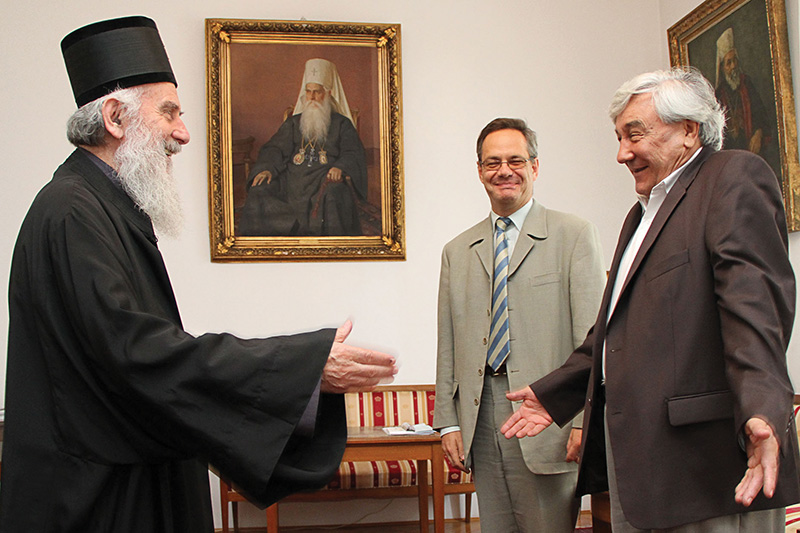
|
|
Academician Sergei P. Novikov, Fields Medal laureate (1970), during his stay in Belgrade from 4 to 11 June 2011 as a guest of the Seminar “Mathematical Methods of Mechanics” of the Mathematical Institute of the Serbian Academy of Sciences and Arts. The photograph captures a meeting with Patriarch Irinej. |
In 2012, the Seminar organised a mini-symposium on Algebraic Geometry, and in 2013, 2018, and 2023 mini-symposia devoted to its 20th, 25th, and 30th anniversaries. The Seminar organised the Belgrade Summer School on Dynamical Systems in 2022 and a summer internship in 2023. Finally, let us highlight that in 2011 the Seminar organised a minicourse by Academician Sergei Petrovich Novikov (Fields Medal, 1970). The title of the course was: Integrable Systems and a New Discrete Complex Analysis.
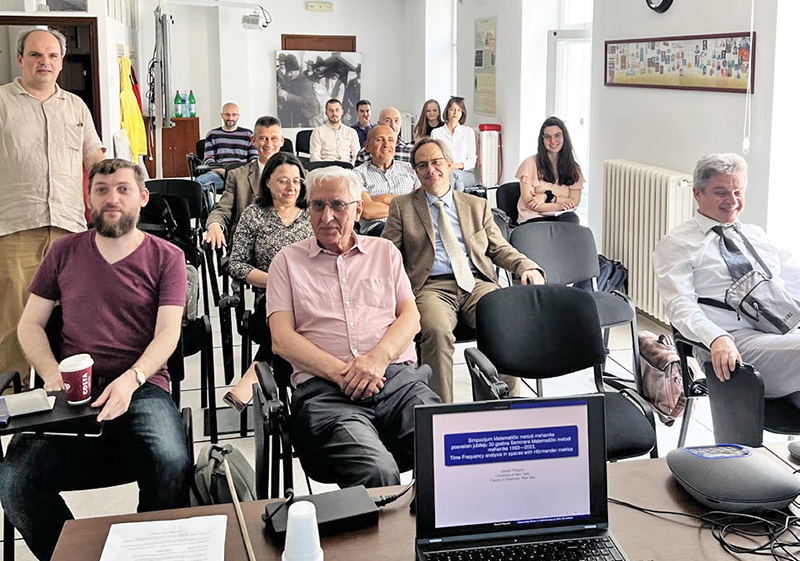
|
|
Seminar meeting marking the 30th anniversary of the Seminar “Mathematical Methods of Mechanics,” 2023 |
Chairperson from 2017 to 2025: Dr Žarko Mijajlović
 At the February 2017 session of the Scientific Council of the Mathematical Institute of SASA, approval was given for the establishment of the Seminar for Theory of Relativity and Cosmological Models within the Department of Mechanics.
The proposal to establish the Seminar was made by Prof. Žarko Mijajlović and Dr Miloš Milovanović. Žarko Mijajlović was appointed head of the Seminar, and Miloš Milovanović secretary, a role he performed during 2017. From 2018 to 2022, the secretary was Tatjana Jakšić Kruger, and since 2023, this role has been held by Nikola Mutavdžić. Between 15 and 20 meetings are held every year, except during the coronavirus period, when only two meetings were held in 2020 and seven in 2021. Over 120 Seminar sessions were held during this period, with between 10 and 25 attendees at each.
Before the Seminar was established, informal meetings of groups of researchers interested in this field were held at the Faculty of Mathematics and at the Mathematical Institute for three consecutive years. The core of this group consisted of Prof. Ilija Lukačević, Dr Dragi Radojević, Prof. Žarko Mijajlović and Dr Miloš Milovanović. In a given semester, there would be 7–8 meetings with 5–10 attendees. The topics were mostly of a survey character, but there were also research presentations that were later published, while graduate students presented their master’s theses. Interest in this field began two decades ago, when the Faculty of Mathematics introduced courses in the theory of relativity and cosmological models into the regular (undergraduate) programme (for mathematicians and astronomers), as well as into the master’s and doctoral programmes. Interest in this field was solid: each year 7–12 fourthyear students in the theoretical mathematics programme enrolled in this course, and several master’s theses were defended. This awakened a certain enthusiasm for this field among the older generation of researchers in the mathematical sciences. Several scientific papers were published on this topic, and thus the idea arose of establishing first an informal seminar and then an official seminar of the Mathematical Institute.
Of course, this seminar is not the only place in our country where topics from the general theory of relativity and cosmology are discussed. Within the existing seminars in geometry, mechanics and astronomy, topics from this field are occasionally presented, and master’s and doctoral theses are written. However, the members of the Seminar are primarily interested in the connection between the general theory of relativity and what its most significant application, cosmology is probably. In other places, e.g., at geometry seminars, purely mathematical (geometric) aspects of the general theory of relativity (GR) are mostly studied, without going too far, for example, into astrophysical interpretations and applications, while the situation at seminars organised by non-mathematicians is reversed. Hence, it is understandable that there is a diversity of professional backgrounds among the audience participating in the work of the Seminar, and the lecturers have included mathematicians, physicists, astronomers, theoretical physicists and philosophers. In addition to original and survey lectures, several short courses were held, i.e., thematic blocks of lectures, usually consisting of four lectures, for example, on the general theory of relativity, field theory and time. The Seminar is held on the premises of the Mathematical Institute, on Wednesdays at noon, as announced. The titles of all lectures, together with abstracts and the names of the lecturers, can be found on the website of the Seminar.
Chairperson: Dr Ivana Atanasovska
 Theory of machines and mechanisms covers machine design theory and methodology, kinematics of mechanisms, rotor dynamics, computational kinematics, multibody dynamics, nonlinear vibrations, linkages and cams, gearing and transmissions, transportation machinery, control and reliability of mechanical systems, including hydraulic and pneumatic systems, experimental research, robots and the robotization of processes, mechatronics, micro and nano-mechanisms, as well as prospective fields of interdisciplinary research in the science of mechanisms and machines and other scientific fields, such as bio-inspired design and materials science. In this framework, the mechanics of machines and mechanisms is a broad research area encompassing various topics in theory and application.
The Seminar Mechanics of Machines and Mechanisms — Models and Mathematical Methods primarily includes lectures and presentations on scientific contributions in areas such as: the dynamics and stability of models of machines and other real complex mechanical systems and structures, as well as kinematics, nonlinear oscillations, and nonlinear phenomena in their mechanics. The elastodynamics of the models of machines and complex structures, their load capacity, and dimensioning based on new scientific knowledge of mathematics and continuum mechanics are also the subject of the Seminar. Lectures dealing with multi-criteria optimisation of the shapes of complex system structures and new descriptions of constitutive relations of materials, as well as fracture mechanics and damage mechanics, are welcome. The Seminar also includes presentations and discussions in the field of developing mathematical methods and models, as well as the application of numerical methods and computer techniques in all other scientific areas related to the mechanics of machines and mechanisms, such as coupled problems in science and engineering, biomimetics, and mechanics of materials.
The current chair of the Seminar Mechanics of Machines and Mechanisms — Models and Mathematical Methods is Dr Ivana Atanasovska, with Dr Stepa Paunović as Secretary.
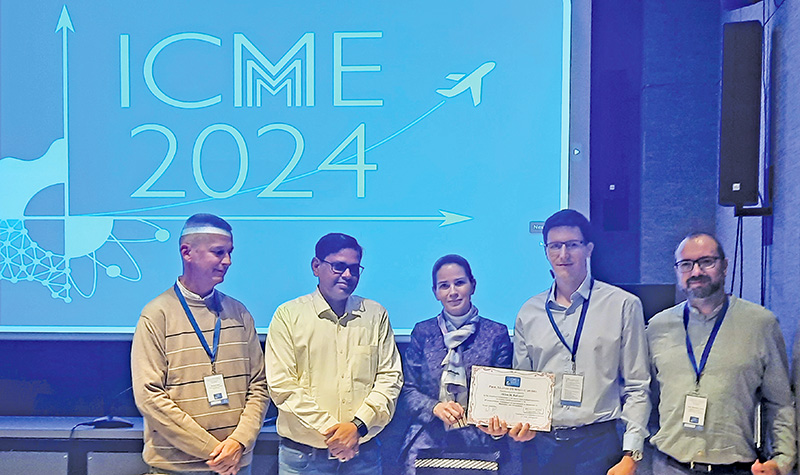
|
|
Award ceremony of the prize named after Prof. Vladan Đorđević at the ICME 2024 conference |
Within the framework of its permanent activities, the main objectives of the Seminar Mechanics of Machines and Mechanisms — Models and Mathematical Methods are: to organise lectures and research reports in applied mathematics and mechanics within the mechanics of machines and mechanisms; public presentation and evaluation of scientific projects; visits by foreign researchers and scientists; workshops, mini-conferences, presentations of books, video lectures, etc. The foundation of the Seminar Mechanics of Machines and Mechanisms — Models and Mathematical Methods has enabled the strengthening of existing forms of cooperation and the establishment of new ones with scientists and researchers from different scientific branches within the engineering sciences, who traditionally focus on applying theoretical mechanics and various mathematical methods to solve real problems. In the period from June 2018 to May 2026, more than 100 meetings and lectures were held as part of the Seminar’s activities. The lecturers were prominent scientists from different universities and institutes in Serbia, as well as from abroad. The activities of this permanent Seminar have enabled the development of new forms of cooperation and new research groups that are preparing joint participation in calls for scientific and research projects at the national and international level, as well as involvement in solving problems faced by industry in Serbia. An important contribution of the Seminar’s work was active participation in several international projects funded through the European Union’s COST calls, which particularly motivated young researchers to be more actively engaged in research on current topics and cooperate at the international level in solving real problems.
In the previous period, a particularly significant contribution of the Seminar and its members was the establishment of a new series of international conferences on mathematical modelling in mechanics and engineering, which are held biennially (International Conferences on Mathematical Modelling in Mechanics and Engineering). In their first two editions (2022 and 2024), these conferences met with a strong response from the domestic and international scientific community and established a tradition of gathering hundreds of researchers and scientists from the broader scientific field of the application of mathematics in engineering sciences every other September at the Mathematical Institute of SASA. A special contribution of these activities is the establishment of an award named after Academician Prof. Vladan Đorđević, which is awarded every two years within the framework of the conference to young researchers with outstanding contributions in the field of fluid mechanics. The founder and chair of this conference series is Dr Ivana Atanasovska, the head of the Seminar Mechanics of Machines and Mechanisms — Models and Mathematical Methods, in collaboration with active members of this Seminar at the MISASA.
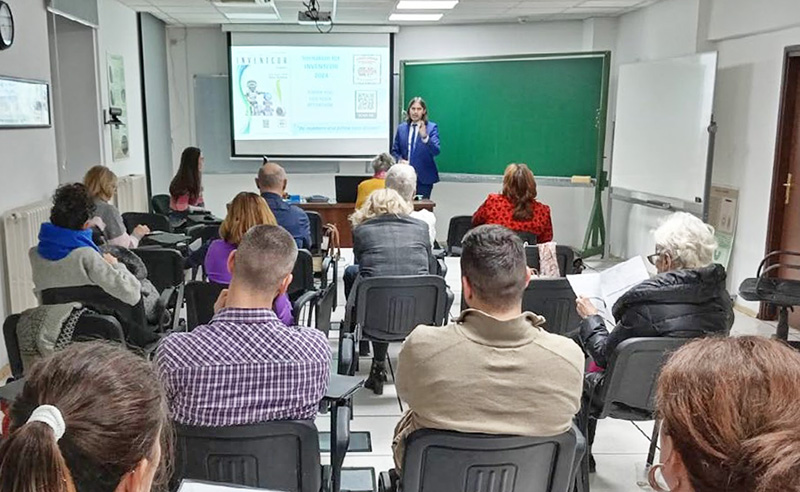
|
|
Lecture by Dr Corneliu Birtok Baneasa at the Seminar Mechanics of Machines and Mechanisms |
Chairperson: Dr Anđelka Hedrih
 The Seminar on Biomechanics, Bioengineering and Mathematical Biology was established at the end of 2021 with the aim of bringing together scientists from different disciplines who study complex biological systems from both theoretical and experimental perspective. Lectures are held in Niš, in Belgrade and online. The founder and the chair of the Seminar is Dr Anđelka Hedrih with Dr Đorđe Jovanović as Secretary.
The seminar aims to facilitate the exchange of scientific knowledge and experience, to promote young researchers and PhD students, and to present the latest results in the fields of biomechanics, bioengineering and mathematical biology. The seminar’s activities include lectures, mini-symposia, scientific discussions and workshops, with participants from Serbia and abroad, as well as collaboration with professional associations.
The seminar covers a wide range of topics — from mathematical modelling of physiological processes and biomechanical models of living systems, to bioengineering, bioinformatics and quantum phenomena in biology. Topics in biomechanics include: biological oscillators, rheological models in biology and medicine, clinical and sports biomechanics, growth and remodelling of biological tissues, synchronization phenomena in biological systems, and the biophysics of molecular interactions.
Topics in mathematical biology include: mathematical models of organisation within different biocenoses, and epidemiological modelling.
Topics in bioengineering mainly include experimental research in the fields of medicine and pharmacy, as well as the development of novel biomedical materials and technologies applicable in clinical practice.
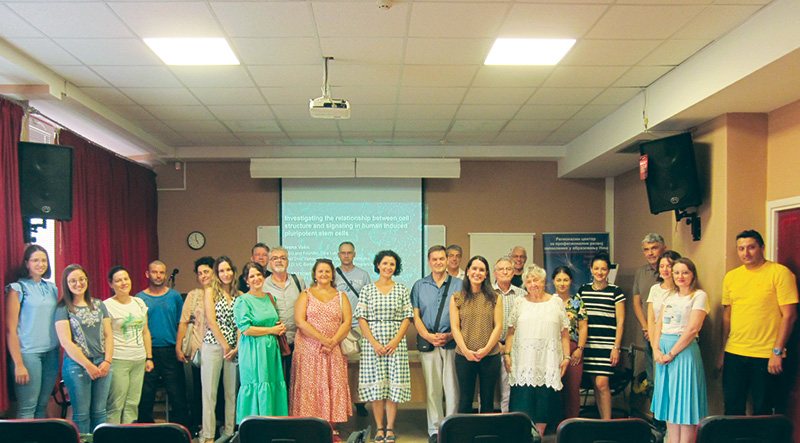
|
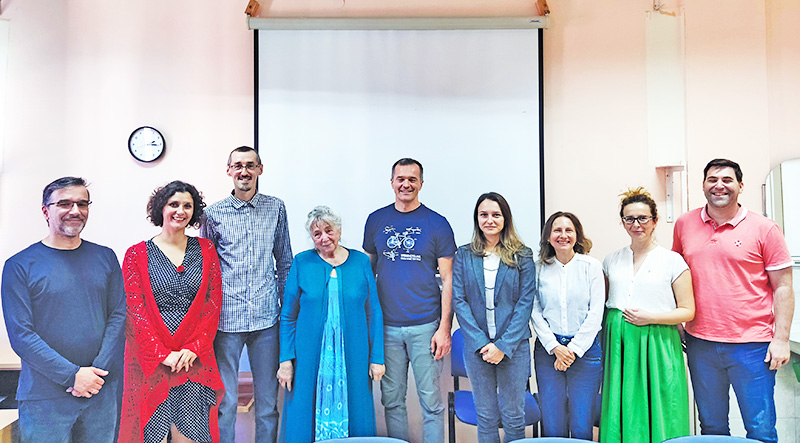
|
|
|
Lecture by Ivana Vasić (Vitra Labs) entitled Investigating the Relationship Between Cell Structure and Signaling in Human Induced Pluripotent Stem Cells, Science Club Niš, 16.08.2023 |
Award ceremony of the prize named after Prof. Vladan Đorđević at the ICME 2024 conference |
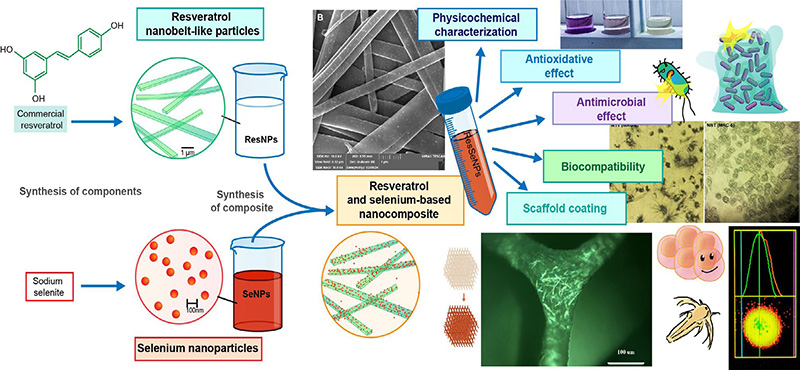
|
|
Graphical abstract of the lecture by Dr Nina Tomić (Institute of Technical Sciences of the Serbian Academy of Sciences and Arts) entitled Composite Material Based on Resveratrol and Selenium Nanoparticles, held on 28 April 2025 |
Chaipersons: Dr Nenad Vesić and Dr Danilo Karličić
|
|
|||
|
Dr Nenad Vesić |
Dr Danilo Karličić |
The idea for establishing this seminar arises from recognizing the profound interconnections among differential geometry, continuum mechanics, and various branches of applied physics and engineering in the broadest sense. These disciplines have not only been driving forces behind numerous pivotal mathematical advancements over the last century but have also played fundamental roles in shaping our understanding of the physical world. Founded with the objective of enhancing postgraduate studies and facilitating research endeavors, the seminar provides a structured forum for the dissemination and exploration of innovative ideas and original research findings, as well as further developing well-established theories.
The seminar began as an informal gathering of a group of interested researchers from the Mathematical Institute of SASA, who met in their office at the MISASA Branch in Niš. Over time, it has evolved into a dynamic platform for scholarly exchange and collaboration. From organising specialized courses on theoretical and computational aspects of solid and fluid mechanics, multiphysics phenomena and differential geometry, to hosting both young and senior researchers from Serbia and abroad, the seminar remains dedicated to advancing knowledge and research in these fields.
The following types of presentations and formats related to mathematics, mechanics, engineering, and physics are welcome:
Presentations of original scientific contributions;
Review lectures;
Specialized courses on specific topics.
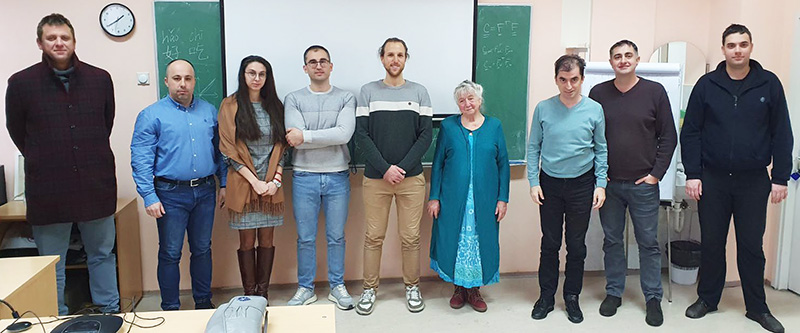
|
|
Meeting of the Seminar for Differential Geometry, Continuum Mechanics and Mathematical Physics, held at the |
Chairpersons: Professor Vera Kovačević Vujčić and Professor Milan Dražić
|
|
|||
|
Dr Vera Kovačević Vujčić |
Dr Milan Dražić |
The Seminar on Applied Mathematics was founded in 1973, as one of the first seminars at the Mathematical Institute. In 2012, its name was changed to the Seminar on Computer Science and Applied Mathematics. From the very beginning, one of the main goals of the Seminar was to encourage interaction between mathematics and other sciences, bringing together mathematicians, scientists, as well as practitioners from other disciplines. Interaction between researchers from scientific institutions and industry has also been strongly encouraged. Reflecting the growing interest in computer science, in recent years, almost half of the lectures have been in the field of computing and its connections with mathematics. Another important goal of the Seminar is to promote young researchers through presentations of their doctoral theses.
The Seminar meetings are devoted to both the presentation of new scientific results and the description of real-life problems whose solution requires knowledge of mathematics and computing. Various topics have been covered, including numerical analysis and its applications, mathematical programming and the calculus of variations, operations research and management science, system theory, graph theory and applications, astronomy and geophysics, probability and statistics, fuzzy sets and logic, decision support systems, metaheuristics, neural networks, artificial intelligence, algorithms and complexity, data mining, data structures, database management, computer security and cryptography, computer communication networks, computer graphics, pattern recognition, software engineering, digitisation, e-business, e-learning, mathematical software, etc. The Seminar also welcomes presentations of books and scientific projects.
In November 2017, the Seminar marked the 20th anniversary of the first paper on the variable neighborhood search method: N. Mladenović, P. Hansen, Variable neighborhood search, Computers & OR, 24(11) (1997), which, according to a bibliometric analysis published in Omega, 73 (2017), ranked 52nd on the list of the 200 most cited papers in operations research and management science, and whose co-author Professor Nenad Mladenović was an active participant in the Seminar. In October 2020, one meeting of the Seminar was devoted to a special issue of the journal Discussiones Mathematicae Graph Theory, 40(2)(2020), published in honour of the late Professor Slobodan Simić, who also actively participated in the activities of the Seminar. The 50th anniversary of the Seminar on Computer Science and Applied Mathematics was celebrated through three sessions of the Seminar held on 6, 13 and 20 February 2024. In the first session the leaders of the Seminar gave an overview of the past activities, while in the next two sessions, titled Look into the Future I – Computer Science and Look into the Future II – Applied Mathematics, 12 young researchers presented their research topics.
The guests of the Seminar included many world-renowned experts in the field of applied mathematics and computer science. Among the visitors, we would like to acknowledge the contributions of Jack Edmonds, Panos Pardalos, Willem Haemers, Alain Hertz, Zoran Obradović, Anton Eremeev, Alexander Strekalovskiy, Ismael Yero, Yury Kochetov, Arutyun Avetisyan and many others.
Since 1995, lectures of the Seminar have been organised jointly with the Faculty of Organisational Sciences. On behalf of the Faculty, the leaders of the Seminar are Professor Zorica Mladenović and Professor Marijana Despotović-Zrakić. The IEEE Chapter on Computer Science (CO–16), Belgrade, Republic of Serbia, has supported the organisation of the Seminar since 2008, under the leadership of Professor Božidar Radenković.
The Seminar on Computer Science and Applied Mathematics meets regularly, from October to May, on Tuesdays at 14:15 at the Mathematical Institute. Since 2023, two sessions per year have been organised in Novi Sad and Niš. The lectures are broadcast live and recorded for the Seminar archive.
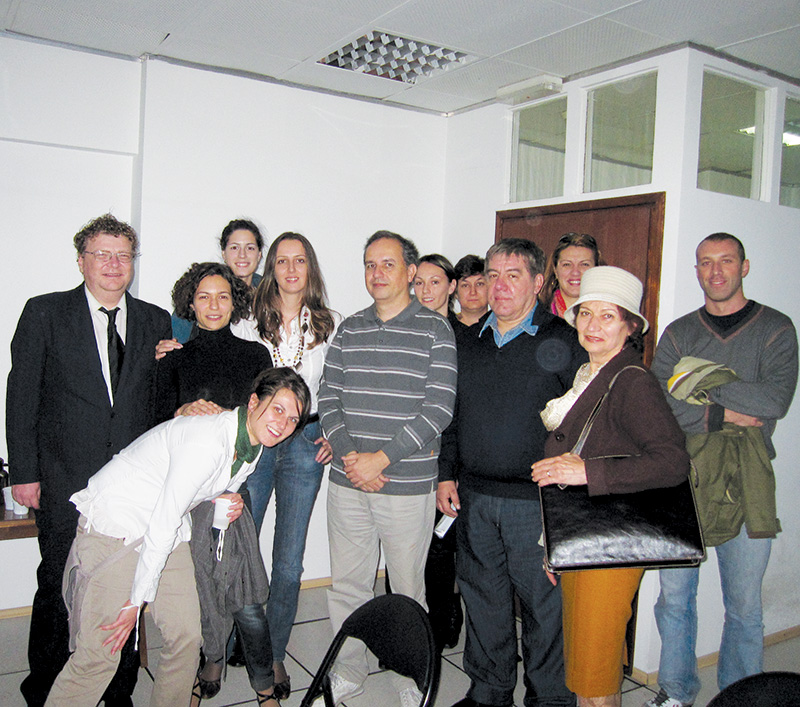
|
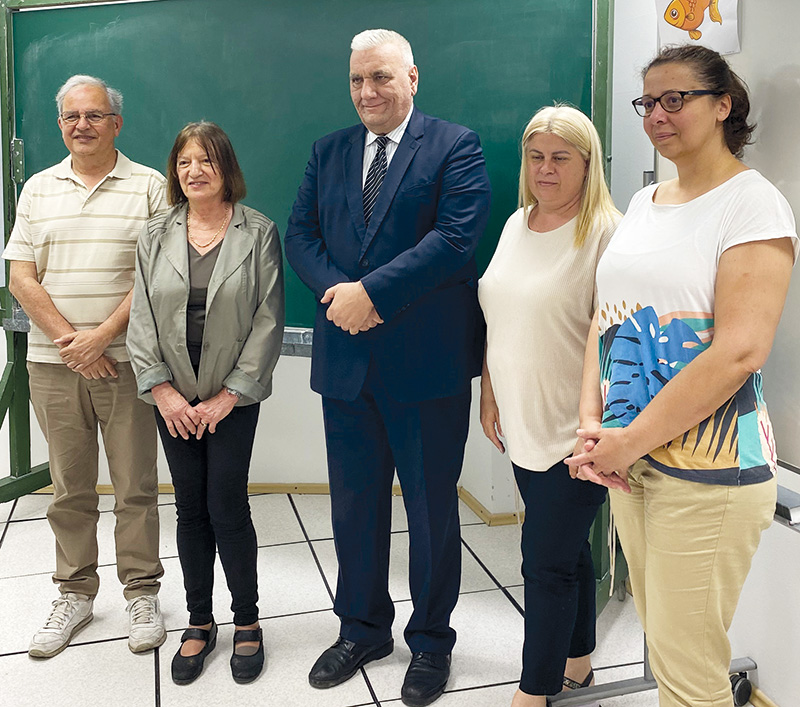
|
|
|
Group photo after a lecture at the Seminar on Computer Science and Applied Mathematics in Belgrade |
Marking the 50th anniversary of the founding of the Seminar (from left to right: Prof. Dr Milan Dražić, Prof. Dr Vera Vujičić, Prof. Dr Božidar Radenković, Prof. Dr Marijana Zrakić, Prof. Dr Zorica Bogdanović) |
|
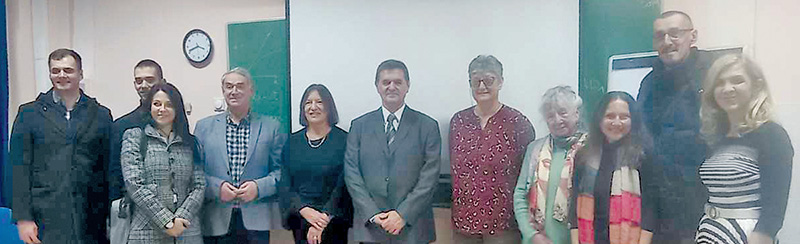
|
||
|
Seminar meeting in Niš, 2024. |
||
Chairperson: Dr Lazar Velimirović
 The scientific seminar, founded in 2017, focuses on contemporary research in the field of decision-making theory, with an emphasis on linking the theoretical and methodological foundations with practical applications across different domains. The aim of the seminar is to bring together researchers, professors, doctoral and master’s-level students, as well as experts from the industrial sector who work on the development and application of decision-making models in complex systems.
In addition to fundamental theoretical approaches, such as classical and multi-criteria decision analysis, game theory, risk and uncertainty analysis, the seminar also encourages the application of modern technologies and methods. Special emphasis is placed on machine learning and artificial intelligence methods to support decision-making, the use of GIS technologies for spatial analysis and spatially oriented decisions, the integration of computer models, optimisation and simulations, as well as innovative hybrid approaches that combine analytical and data-driven methods.
Special attention is paid to the application of theoretical models to solving real-world problems in the fields of engineering, telecommunications, energy, transport, economics , resource management, public policies and digital transformation processes. The seminar is also open to presentations of new methods, algorithms and tools that help improve the decision-making process under conditions of uncertainty.
Chairperson: Dr Andreja Tepavčević
This seminar in Artificial Intelligence was established as a continuation of the Serbian AI Meeting held in December 2020. The seminar started in April 2021, and by the end of 2025 around 160 lectures had been held, with more than 420 participants. The AI seminar is designed to connect researchers from Serbia and the diaspora, as well as researchers from universities and scientific institutes, and practitioners.
Various scientific topics and results in the field of artificial intelligence have been presented at the Seminar ranging from traditional topics such as logic and formal methods, reasoning, knowledge representation, natural language processing, machine learning, computational intelligence, artificial neural networks, to applications of artificial intelligence in different fields. Speakers from 25 different countries — including the UK, Russia, the USA, Korea, Australia, and many EU and Western Balkan countries — have participated in the Seminar.
Since the participants come from all Serbian universities and institutes connected to AI, foreign universities, and Serbian and foreign companies, the AI Seminar has been held exclusively online. The languages of the Seminar are Serbian and English.