
National Institute of the Republic of Serbia

ὅδε οἶκος, ὦ ἑταῖρε, μνημεῖον ἐστιν ζωῶν τῶν σοφῶν ἀνδρῶν, καὶ τῶν ἔργων αὐτῶν
Text prepared by Dr Marija Šegan-Radonjić based on the original text by Dr Zoran Marković
The Mathematical Institute of SASA was founded in 1946 as the first scientific institute of the Serbian Academy of Sciences. Its establishment marked a turning point in the institutional development of mathematics in Serbia, laying the foundations for organised scientific research during a period of post-war recovery and social transformation. Although the Institute began its work in a country devastated by war, it relied on significant traditions of earlier scientific and educational development.
Modern mathematical activity in Serbia emerged at the end of the 19th century. Its leading figures were professors of the Great School, later the University of Belgrade, who had been educated at prominent universities in Germany, Austria-Hungary, and France. The arrival of Russian émigrés after the First World War further stimulated the development of mathematics in Serbia; among them were distinguished mathematicians who significantly improved teaching, scientific research, and the institutional framework.
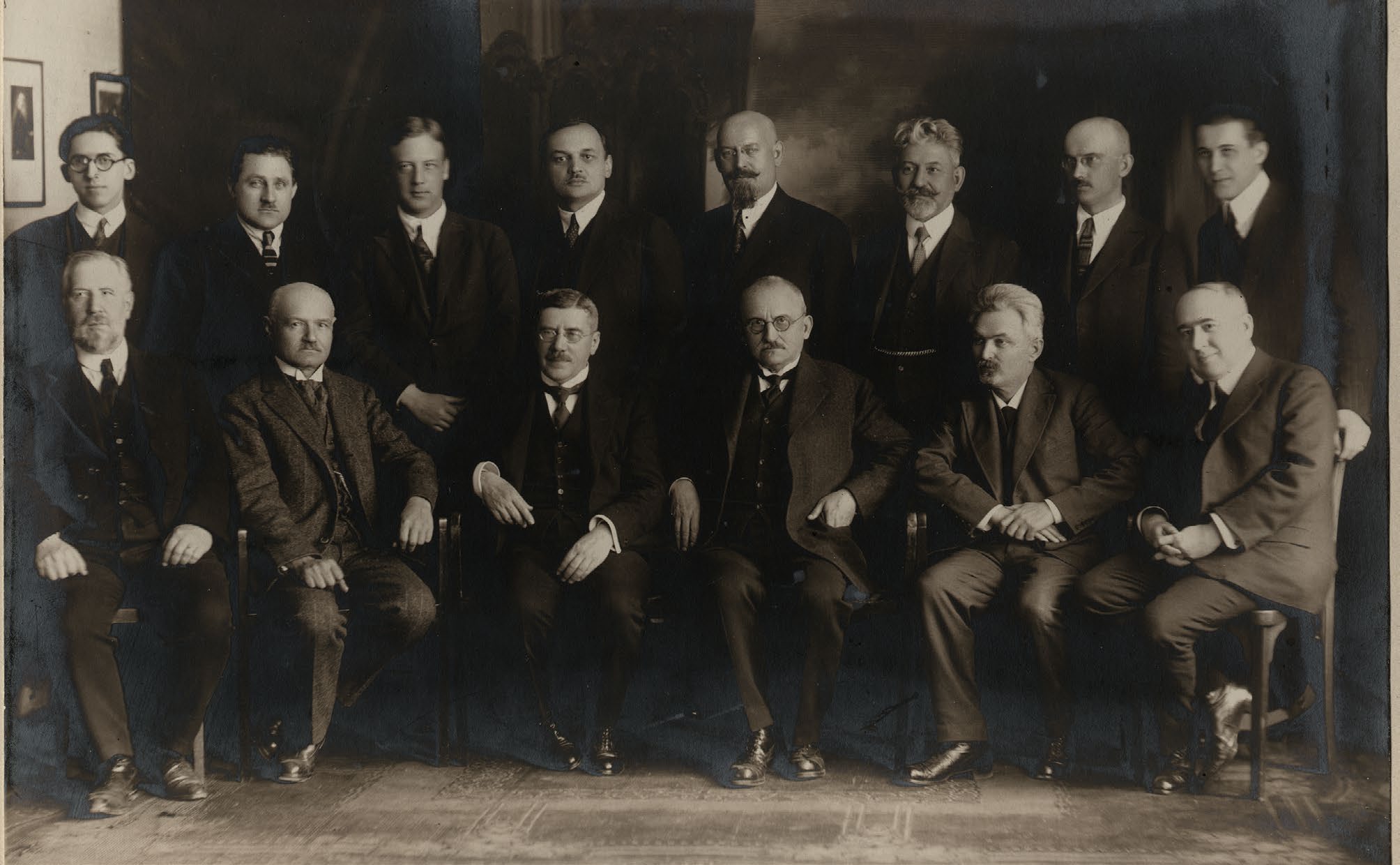
During the 1920s, an informal organisation — the “Club of Mathematicians” — was formed, bringing together University of Belgrade professors interested in scientific research. The Club held regular scientific lectures, and in 1932 launched the first international mathematical journal in Serbia: Publications Mathématiques de l’Université de Belgrade.
The Club’s work was supported by the rich library of the Mathematical Seminar, founded in 1895. However, almost the entire collection of the Seminar and the University library was destroyed in 1944, only two days before the liberation of Belgrade. The last printed issue of Publications was lost during the 1941 bombing — only a single copy survived, kept in the editor’s home.
After the war, the founders of the Institute — former members of the Club of Mathematicians — recognized the new institution as a means of renewing mathematical activity in the country. The original seven members soon elected seven more associates; scientific lectures resumed (first monthly, then weekly) and a systematic restoration of the library began.
In 1947, a new series of the journal appeared, now under the title Publications de l’Institut Mathématique, thereby restoring continuity with the pre-war series and clearly emphasizing the Institute’s commitment to international scientific cooperation.
One of the greatest challenges during the Institute’s early years was the lack of young researchers, as nearly all founders were older than sixty. The admission of the first cohort of fellows and assistants in 1949 marked the beginning of a gradual but steady strengthening of the Institute’s staff.
|
|
Belgrade Mathematical School. Photograph by M. Savić, 1926. Miloš Radojčić, Tadija Pejović, Vyacheslav Zhardetsky, Anton Bilimovič, Petar Zajankovski (Jelenko Mihailović, seismologist), Radivoj Kašanin, Jovan Karamata (standing). Nikola Saltikov, Mihailo Petrović (Pavle Popović, Rector), Bogdan Gavrilović (K. Petković, Dean of the Faculty of Philosophy), Milutin Milanković (seated). (SASA Archives, 14197/16) |
Instead of employing a large number of researchers, the Institute developed a model in which its associates were predominantly university employees, while the Institute provided scientific infrastructure — a library, seminars, publishing activities, and support for establishing international collaboration. This organisational model proved particularly suitable for the structure of higher education in Serbia, where mathematicians were distributed across various faculties.
As the university network expanded throughout Yugoslavia, cooperation between the Institute and newly established universities and mathematics departments became increasingly important. Young mathematicians typically received advanced training at the Institute and then went to Skopje, Sarajevo, and Novi Sad, where they became leading figures in scientific and educational development.
During the 1950s and 1960s, the Institute employed a small number of assistants who, after further training, usually continued their careers at universities, contributing to the formation of new mathematics departments. Thanks to this model, the Institute remained the principal scientific centre in the field of mathematics, while the number of permanent researchers remained limited. Only after legislative changes in the 1970s and new models of financing after 2001 did the number of employees begin to grow gradually.
In the first decades of the Institute’s existence, analysis and mechanics were the dominant research areas. However, from the outset, the Institute supported work in all mathematical disciplines that met high scientific standards. In line with global trends and the interests of individual researchers, areas of focus changed over time: in the 1970s, logic became one of the most dynamic fields; in the 1980s, geometry and topology came to the forefront; while in the 1990s, analysis and mechanics regained strength. In recent decades, fields closely related to computing — cryptology, optimisation, graph theory, and other applied disciplines — have gained particular prominence.
The Institute recognized the importance of computing relatively early and, in the mid–1960s, established a Computing Centre equipped with an IBM 360 — one of the most advanced scientific computers of its time. However, due to high maintenance costs, limited resources, and political and economic changes in Yugoslavia, the Centre’s activities gradually declined and were fully discontinued in 1985. Afterward, the Institute focussed its research activities on the use of personal computers.
As an important consequence of this technological shift, the Institute initiated activities in the field of digitisation as early as the late 1980s. First, digital preparation of Publications was introduced, followed by a systematic digitisation program. In the decades that followed, the Institute developed broad academic and cultural collaborations with institutions in Serbia and abroad, resulting in numerous projects and achievements in the preservation of scientific and cultural heritage. From the second half of the 1980s onward, the Institute participated in numerous largescale national scientific projects — both in terms of the number of researchers involved and thematic diversity. At the beginning of the 21st century, the Institute became actively engaged in European scientific programmes, such as FP7, Horizon 2020, and others, which further enhanced its international visibility.
The Institute gained independent status in 1961 but continued to operate under the auspices of the Academy. After the adoption of the new SASA Law in 2010, it was reintegrated into the Academy, strengthening its institutional position. Further progress was confirmed by the introduction of institutional financing in 2020, while a major milestone was reached on March 25, 2021, when the Mathematical Institute of SASA was declared an institute of national importance.
The Institute’s international reputation was further reinforced in September 2023, when it became a member of European Research Centres on Mathematics, an important recognition of its scientific contributions at the European level.
The celebration of the 80th anniversary of the Mathematical Institute of SASA is not only an opportunity to honor the Institute’s rich history, but also a moment to reflect on its enduring role in the institutional development of mathematics in Serbia.
|
|
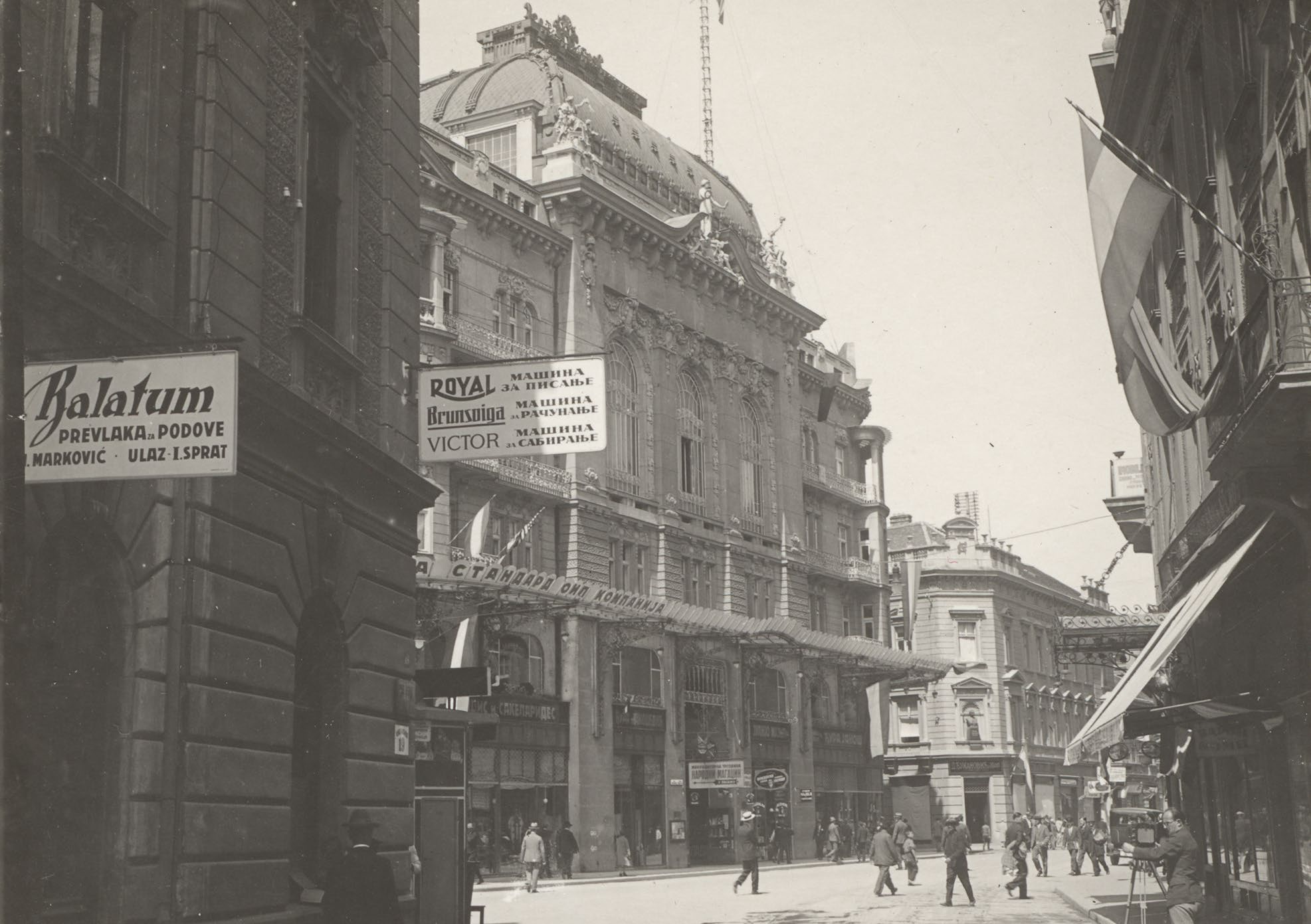
The Palace of SASA, which housed the Mathematical Institute of SASA from 1952 to 2008. |