
National Institute of the Republic of Serbia

ὅδε οἶκος, ὦ ἑταῖρε, μνημεῖον ἐστιν ζωῶν τῶν σοφῶν ἀνδρῶν, καὶ τῶν ἔργων αὐτῶν
Text prepared by Dr Zoran Ognjanović based on the original text by Dr Zoran Marković
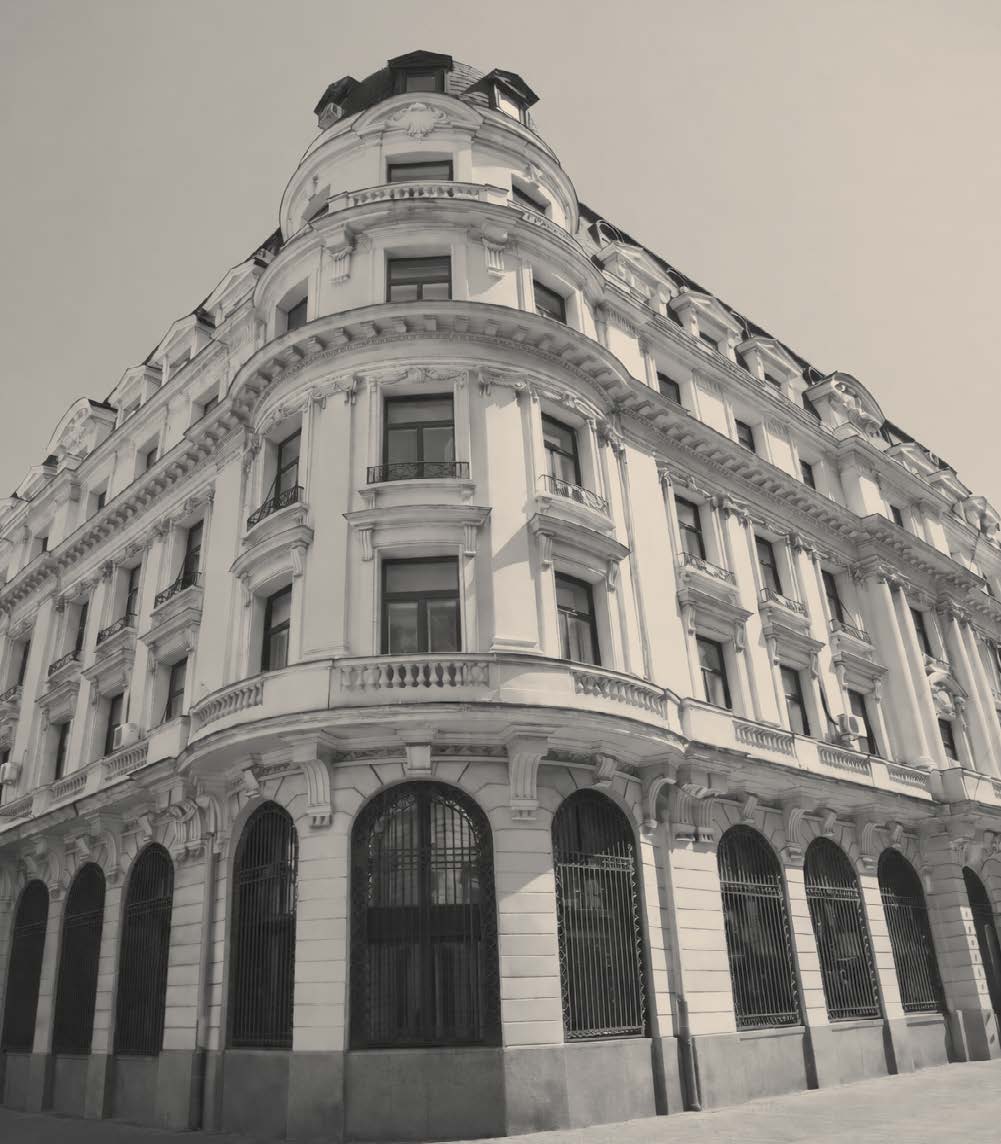 The Mathematical Institute of the Serbian
Academy of Sciences and Arts (MISASA) — an institute of national importance to the Republic of Serbia, an institutional member of the European Mathematical Society (EMS) and a member of ERCOM, the EMS Union of European Research Centres in Mathematics — is a unique centre for research in pure and applied mathematics, mechanics, and computer science in Serbia. This is clearly reflected in a wide range of activities, including the organisation of national and international scientific projects, conferences, workshops, summer schools, and seminars, as well as informal research groups.
The Mathematical Institute of the Serbian
Academy of Sciences and Arts (MISASA) — an institute of national importance to the Republic of Serbia, an institutional member of the European Mathematical Society (EMS) and a member of ERCOM, the EMS Union of European Research Centres in Mathematics — is a unique centre for research in pure and applied mathematics, mechanics, and computer science in Serbia. This is clearly reflected in a wide range of activities, including the organisation of national and international scientific projects, conferences, workshops, summer schools, and seminars, as well as informal research groups.
In its first 60 years, the Institute did not have a large permanent staff, but over the last 20 years, many new researchers have been hired. In addition to its headquarters in Belgrade, two other departments have been established in Novi Sad and Niš. Currently, the institute employs nearly 90 researchers, about two-thirds of whom hold PhDs, while the remainder are doctoral students. Nevertheless, the Institute still relies heavily and successfully on its numerous associate members, who have always played an essential role not only as heads of projects and seminars but also in managing the Institute as a whole. These scholars are from all over Serbia, which allows the MISASA to maintain close contacts with universities across the country, particularly with faculties of science and mathematics and with schools of engineering.
The Institute is run by a Managing Board and a director, who is elected by the Board with the Academy’s approval. Since 2010, when the new Law on the Serbian Academy of Sciences and Arts was adopted, the Managing Board has consisted of five members appointed by the Academy, the Institute, and the Serbian government. All major decisions concerning scientific policy are made by the Institute’s Scientific Council, which is composed of all research staff holding a PhD and three representatives of the Academy. After the adoption of the Law on Science and Research, which introduced institutional financing for scientific institutes instead of the previous project-based model, the MISASA adjusted its organisational structure. Instead of grouping researchers into projects, three sectors were established in 2021: Mathematics, Computer Science, and Mechanics. Within these sectors, fundamental research is conducted in the corresponding fields, while dedicated centres carry out interdisciplinary and applied research.
One of the most important factors encouraging researchers to gather at the Institute is its rich library. Its valuable holdings include more than 12,000 books and hundreds of mathematical journals, many of them from their first issues. Researchers also have online access to (semi) public IT resources as well as to databases containing scientific content (e.g., eLib – electronic editions of Serbian mathematical journals with open access to full texts, and the institutional repository of research papers authored by the Institute’s collaborators).
Another activity that has made the MISASA a popular place among mathematicians is the organisation of colloquia and seminars, whose meetings are held regularly every week. Their chairpersons are expected to invite foreign and domestic researchers to present their own and others’ results and to organise discussions on issues important for research in the mathematical sciences.
The Institute’s development over the last two decades testifies to an intense exploration of new directions in multidisciplinary research, such as information processing and security, the digitisation of cultural and scientific heritage, and novel approaches to presenting research results. In recognition of this orientation, the Serbian Academy’s award in the field of mathematics and related sciences was presented in 2013 to a group of five research professors from the Institute.
In 2012, the Institute, together with the Centre for the Promotion of Science, launched the largest national festival for the popularization of science, “May, the Month of Mathematics”. In 2011, in cooperation with the Mathematical Grammar School, a programme for monitoring the progress of young mathematical talents was created. Since 2017, the Institute has been awarding annual prizes to the best undergraduate, master’s, and doctoral students from Serbia in the fields of mathematics, mechanics, and computer science. In collaboration with universities from Novi Sad, Niš, Kragujevac, and Novi Pazar, the MISASA has also established a joint doctoral school in mathematics. In cooperation with the Serbian Society for Mathematical Sciences, the Institute organises the national Congress of Young Mathematicians.
These activities illustrate the Institute’s efforts to realise its mission, which is defined as:
Achieving and maintaining the highest level of scientific research in mathematics, mechanics, and computer science;
Mobilizing mathematical resources in Serbia, offering research infrastructure, and improving communications between groups with similar scientific interests;
Discovering ways and means of applying scientific results; Solving problems posed by science and industry;
Organising scientific and expert training and participating in the organisation and delivery of doctoral studies;
Organising international collaborations and supporting participation in domestic and international scientific conferences;
Supporting the education of young people of exceptional talent;
Popularizing the mathematical sciences.
This mission confirms the Institute’s orientation toward Responsible Research and Innovation, a modern approach to science that involves communication and cooperation with all societal actors.
|
|
|
|
|||
|
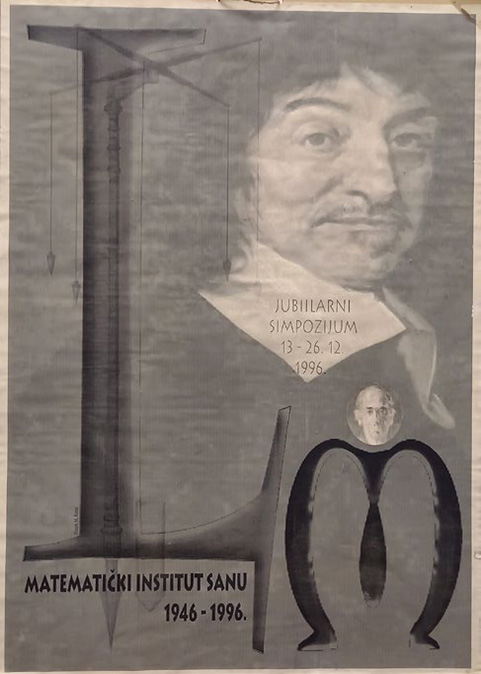
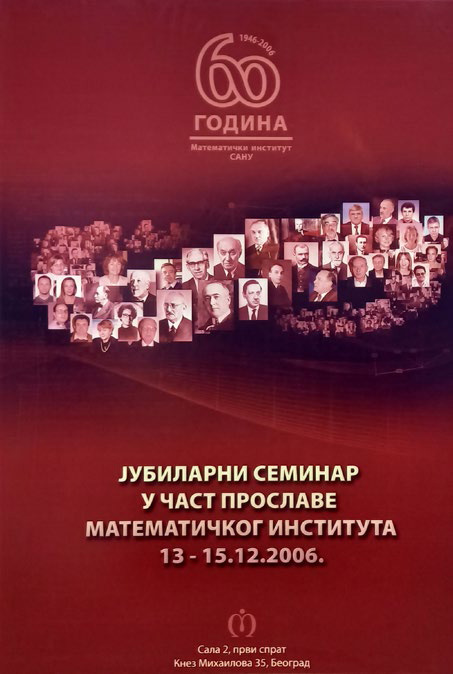
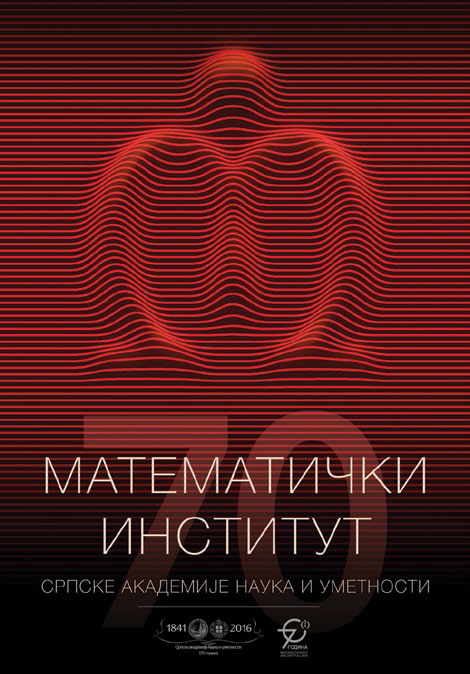
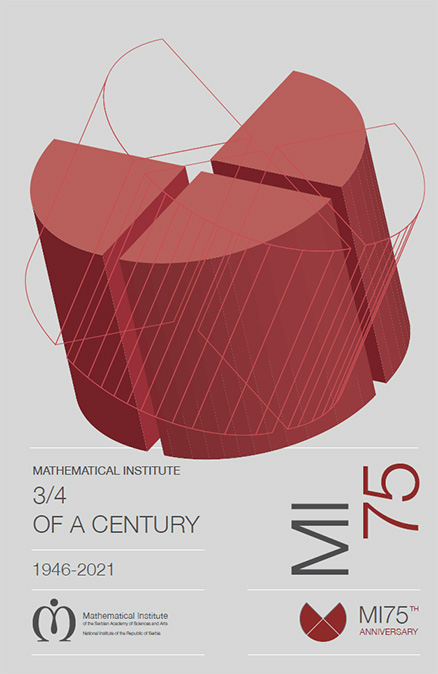
Promotional posters marking the 50th, 60th, 70th, and 75th anniversaries of the Mathematical Institute of the Serbian Academy of Sciences and Arts |
||||||