

National Institute of the Republic of Serbia

ὅδε οἶκος, ὦ ἑταῖρε, μνημεῖον ἐστιν ζωῶν τῶν σοφῶν ἀνδρῶν, καὶ τῶν ἔργων αὐτῶν
Imagine a network of nodes connected by edges. The spectral radius of such a network is closely related to its potential for the spread of an infection or information. A classical open problem asks: which connected networks with a given number of nodes and edges have the maximal spectral radius? In the LZWK project we tackle this question by analysing a lazy walker who at each step either remains at the current node or moves to a neighbouring node — a model that is easier to analyse here than an active walker, who must move to a neighbour at every step. In the second part of the project, when our lazy walker gets tired of walking, we will apply reinforcement learning to construct particularly interesting networks that exhibit extremal properties tailored to mathematicians’ needs.
 Advanced Techniques of Mathematical Aggregation and Approximative Equations Solving in Digital Operational Research, AT–MATADOR
In the project, contemporary mathematical areas in algebra and analysis dealing with aggregation operators and approximate equation solving are developed and investigated with the main objective of obtaining advanced techniques applicable to digital operational research. Some of the first results obtained are connected to new algebraic structures that are useful in applications where not all possibilities are linearly ordered. Approximate solutions for several types of fuzzy relational equations are determined, which are convenient in cases where there is a lack of information, corrupted data, or errors, as well as problems with data ranking. A new method for the prioritization of data based on the Choquet integral has also been developed. Some of the project results have already been published in journals of the highest category and presented at leading conferences in this area.
 Approximate Algebraic Structures of Higher Order: Theory, Quantitative Aspects and Applications, A–PLUS
The project A–PLUS advances the theory of Gowers uniformity norms, which are a central object of the higher–order Fourier analysis. It focuses on understanding approximate algebraic structures, especially Freiman multihomomorphisms, to address open questions in the inverse theory, including obtaining novel inverse theorems and achieving good quantitative bounds. An important aspect of the project is to extend the algebraic regularity method from finite vector spaces to general finite abelian groups. The project also draws on tools from additive combinatorics and aims to produce significant new results with applications in number theory and combinatorics.
 Integration and Extremal Problems in Mechanics Geometry and Combinatorics, MEGIC
MEGIC is a natural continuation of the project 174020 (2011–2019, PI Vladimir Dragović) which brought together 14 researchers from the Mathematical Institute, the Faculty of Mathematics and the Faculty of Technology- Metallurgy, University of Belgrade. In the IDEAS call, it was the highest ranked project in the fields of mathematics, mechanics and computer science. MEGIC provided a foundation for the development of new geometric and topological methods in solving fundamental problems in integrable systems; geometric combinatorics; non-holonomic and Hamiltonian mechanics; geometry of Lie groups; convex analysis and optimal control. Several long-standing problems were solved with significant breakthroughs: classification of resonant billiard trajectories; deforma23 tions of extremal polynomials and solutions of Painlevé VI and Schlesinger equations; the proof of Bogoyavlensky’s conjecture; general matrix pencil completion problem; Bier spheres and generalized permutohedra. More than 50 papers were published in leading international journals.
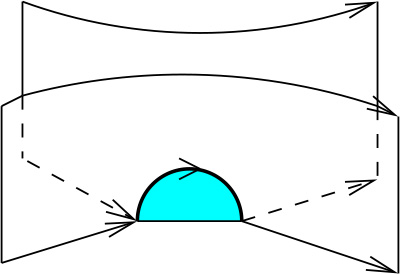 Graphical Languages, GWORDS
During the period 2022–2024, the project involved twelve researchers from the Mathematical Institute of SASA and the Faculty of Mathematics, University of Belgrade: Danica Cekić, Bojana Femić, Jovana Obradović, Zoran Petrić, Marko Stošić, Mladen Zekić, Dušan Drobnjak, Milica Jovanović, Jovana Nikolić, Tanja Stojadinović, Igor Uljarević and Siniša Vrećica. The research used methods from the fields of algebraic topology, symplectic geometry, categorical logic and mathematical physics, combined with coherence and categorification. The main problem was the faithfulness of 3–dimensional topological quantum field theories. All the goals have been achieved.
SMART is a project in Foundations of Mathematics. The objects of investigation are classes of structures, similarities of structures and the related classification. The members of the team completed 44 papers. 30 papers have been published in international journals: 3 of category M21a, 7 of category M21, 10 of category M22 and 10 of category M23, and 3 in Zbornik radova Matematičkog instituta (Proceedings of the Mathematical Institute). 22 papers belong to set theory, 12 to model theory and 10 to Ramsey theory. The team members gave 7 invited and 16 contributed lectures at international conferences, and organised three international conferences: SETTOP 2022, YSTW 2022 and SETTOP 2024 at the Faculty of Sciences, Novi Sad.
 Advanced artificial intelligence techniques for analysis and design of system components based on trustworthy BlockChain technology — AI4TrustBC
Blockchain (BC) is a specially designed distributed data storage structure, maintained without any third party that must be absolutely trusted. BC is applicable in various domains, cryptocurrency/finance, digital identity, voting, notary, smart contracts, IoT, insurance, healthcare, etc. Verification of data is realised by the so-called consensus protocols (CP), most of which are based on cryptographic techniques. The reliability and security of CPs are issues of paramount importance. Artificial Intelligence (AI) and BC have proven to be quite a powerful combination, improving virtually every industry in which they are implemented. The goal of this project is to make a contribution to the application of AI techniques (machine learning, knowledge reasoning based on formal methods, non-classical logics, and metaheuristics) in the BC technology domain for managing privacy, ensuring consistency and reliability.
 LibrAIfy, the software for increasing the quality of scanned documents and optically recognized text, LibrAIfy
LibrAIfy is an artificial intelligence-based software solution in the field of digitisation of written cultural heritage, adapted to the needs of the National Library of Serbia, with a focus on improving the quality of scanned documents and recognized text. The solution consists of several modules for digital image processing and natural language processing, as well as a user interface for monitoring the digitisation process and searching digital content by keywords. The software solution is integrated with the existing Digital NLS platform. Supporting modern digitisation standards and user requirements, the proposed software solution enables the digitisation and efficient management of digitised materials.
The goal of the project was to create a decentralized platform that will make monetizing, distributing and protecting digital content as straightforward as possible, while on the other hand providing security and DRM capabilities previously available only to the largest players in the digital content industry. The platform should provide a streamlined solution for anyone who wants to distribute their digital content and sell it through the network. Four main capabilities of the network include:
Distribution of digital content;
Purchase of digital content via online and micro-payments;
Secure access to purchased digital content;
Digital rights management (DRM) of secured content.