
National Institute of the Republic of Serbia

ὅδε οἶκος, ὦ ἑταῖρε, μνημεῖον ἐστιν ζωῶν τῶν σοφῶν ἀνδρῶν, καὶ τῶν ἔργων αὐτῶν
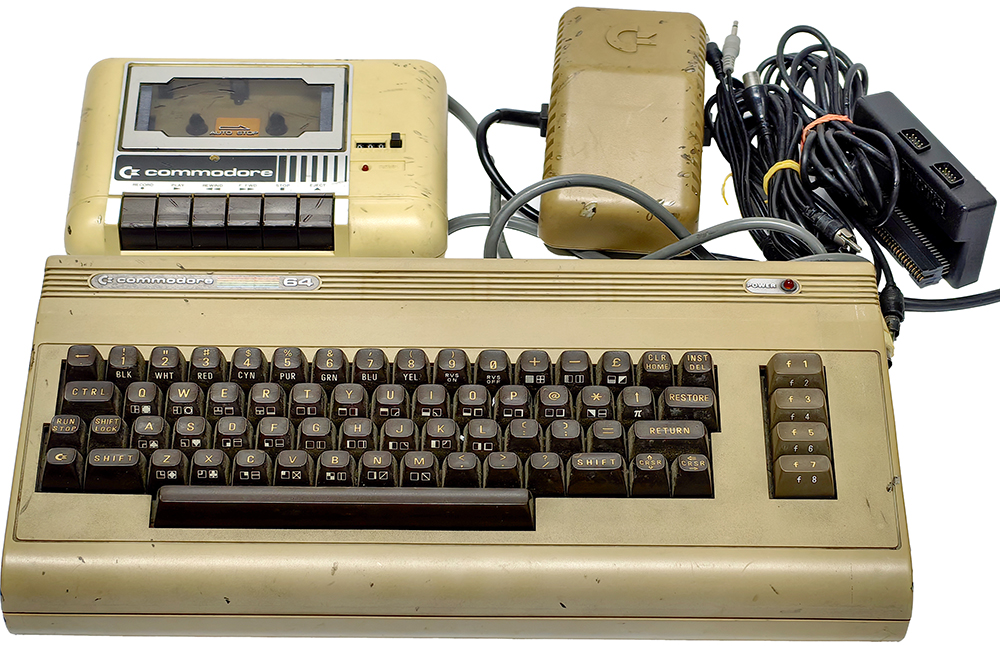
The Commodore 64 (C64) was developed by Commodore International and introduced in 1982. The computer was created by the company’s MOS Technology division in West Chester, Pennsylvania, USA, in an exceptionally short time — less than a year. Key figures in its development included: Robert “Bob” Yannes, who designed the iconic SID chip (6581) and contributed to the hardware architecture; Al Charpentier, responsible for designing the VIC-II graphics chip; Fred Bowen, who worked on the KERNAL operating system and BASIC interpreter; and Charles Winterble, the then Director of Engineering. Designed to be an affordable yet powerful home computer, the C64 featured 64 KB of RAM, advanced graphics, and sound capabilities far ahead of its time. Thanks to its competitive price and wide availability, the C64 quickly made its way into millions of homes worldwide. It was used for a wide range of purposes — from gaming, programming, and education, to basic office work. Its hardware enabled top-tier games of the era, while its accessibility inspired entire generations to learn programming. The Commodore 64 holds historical importance as the best-selling personal computer of all time, with over 17 million units sold. It played a pivotal role in the popularization of home computing during the 1980s, shaped the early video game industry, and fostered the growth of a vibrant community of developers and tech enthusiasts. Its legacy continues to this day through education, digital culture, and global enthusiast communities.
Creator: Commodore International, 1982
Source: Gift of Vanja Korać
Text prepared by Vanja Korać
Photo by Dragan Aćimović