
National Institute of the Republic of Serbia

ὅδε οἶκος, ὦ ἑταῖρε, μνημεῖον ἐστιν ζωῶν τῶν σοφῶν ἀνδρῶν, καὶ τῶν ἔργων αὐτῶν
Academician Branislav “Brana” Petronijević (Sovljak near Ub, 1875 – Belgrade, 1954), philosopher and mathematician, full professor at the Grande École and, from its founding, at the Faculty of Philosophy of the University of Belgrade, was a member and secretary of the Academy of Philosophical Sciences of the Serbian Royal Academy (corresponding member from 1906, full member from 1920, secretary in 1932–33), and, from 1948, a member of the Department of Natural and Mathematical Sciences of the Serbian Academy of Sciences, today’s Department of Mathematics, Physics, and Geosciences of the Serbian Academy of Sciences and Arts (SASA). Petronijević was a polymath, and a Renaissance-type scientist whose wide range of interests resulted in an exceptionally rich bibliography of over four hundred entries, published primarily abroad in German, French, and English, in leading international journals and with renowned publishers. The scope of Petronijević’s work is perhaps best attested by his Résumé des travaux philosophiques et scientifiques for the period 1896–1936 (Belgrade: Académie royale Serbe, 1937). Based on the Résumé, we can see that the largest portion of Petronijević’s oeuvre consists of mathematical and scientific writings, as well as works in mathematical philosophy, history and philosophy of mathematics and the exact natural sciences. Here, for the first time, we publish a chronologically sorted comprehensive bibliography of Petronijević’s works in the fields of (i) mathematical sciences (mathematical analysis, geometry, logic and algebra, mechanics and physics, cosmography, etc.), (ii) the historiography, philosophy, and foundations of mathematics, and (iii) the historiography of the exact natural sciences (including biobibliographical studies devoted to distinguished scientists). All of the works listed below have been made available to researchers in digital form. We would like to express our gratitude to the Library of the Serbian Academy of Sciences and Arts and the Audiovisual Archive and Center for Digitization of SASA, the Library of Matica srpska, the National Library of Serbia, the University Library “Svetozar Marković,” and the libraries of the Faculty of Philosophy of the University of Novi Sad, the University of Munich, and the University of Amsterdam, for their wholehearted assistance and support in the preparation of this bibliography and the accompanying digital repository of Petronijević’s works devoted to the mathematical sciences.

Author: Saša Popović |
|
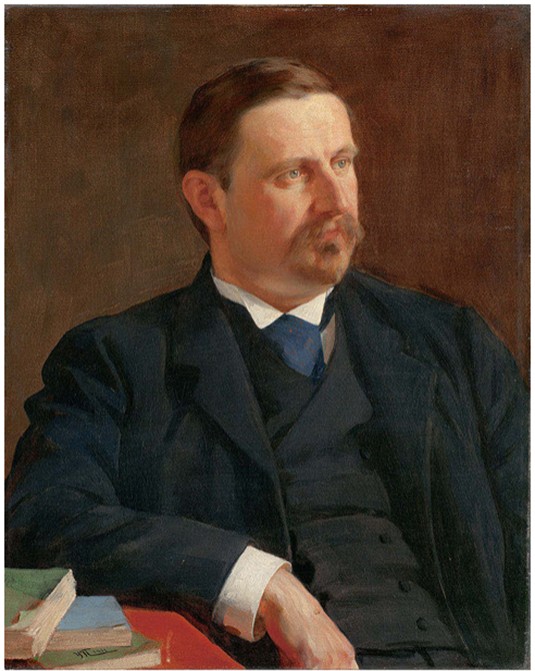
Uroš Predić, Portrait of Brana Petronijević, 1911 |
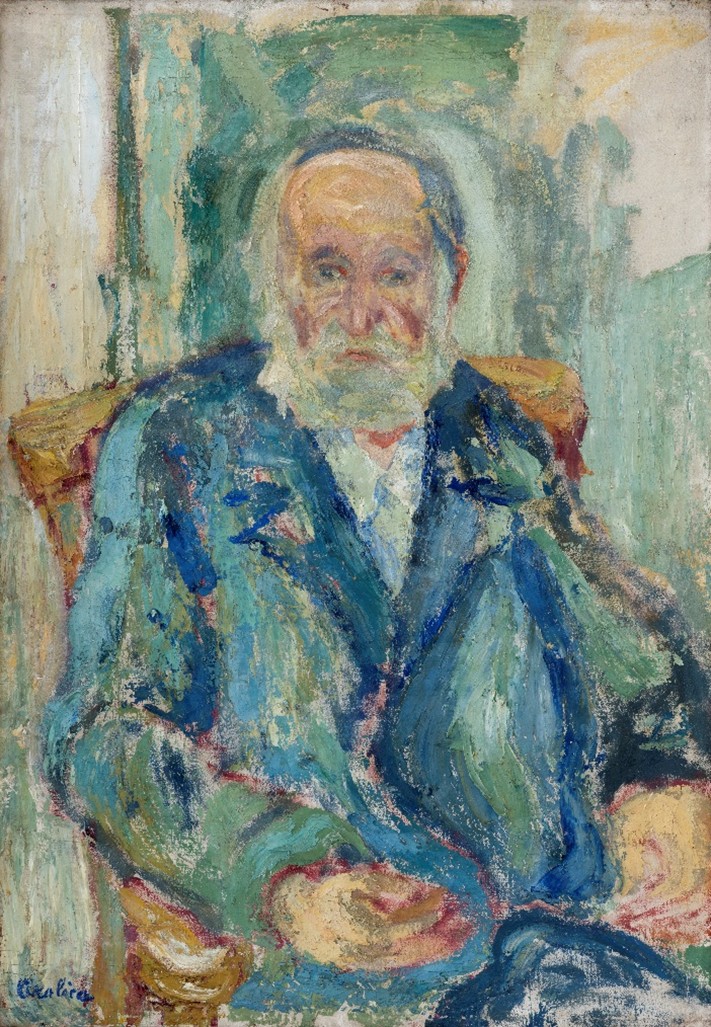
Stojan Aralica, Portrait of Brana Petronijević, 1954 |
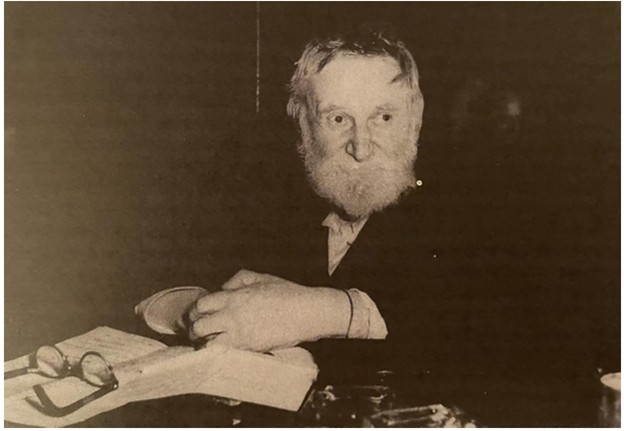
Petronijević in the café of Hotel “Majestic” in Belgrade, probably taken during the autumn of 1953
(From the SASA Archive)
Branislav Petronijević was the first Serbian philosopher and mathematician to engage systematically with the history, philosophy, and logical foundations of mathematics (especially geometry, analysis, and arithmetic), as well as with the history and philosophy of the exact natural sciences. In addition to his works in pure mathematics—primarily geometry and analysis—Petronijević also worked on classical and celestial mechanics, physics, the foundations of astronomy and mathematical geography. He wrote on the history of astronomy and cosmology, on the theory of gravitation, as well as on the theory of evolution and the history of evolutionary ideas (papers on Charles Darwin and Alfred Russel Wallace), and even on the history of chemistry (on Lothar Meyer, John Newlands, and Dmitri Mendeleev). An examination of Petronijević’s Nachlass from the Archive of the Serbian Academy of Sciences and Arts and the Special Collections of the National Library of Serbia shows that he was one of the pioneers of studying quantum mechanics, particle physics, and the theory of relativity in Serbia.
Petronijević was particularly dedicated to promoting the achievements and contributions of scientists of Slavic origin, as evidenced by his works and historical and biobibliographical studies devoted, among others, to Ruđer Bošković (R. J. Boscovich), Nicolaus Copernicus, Nikolai I. Lobachevsky, Dmitri I. Mendeleev, and Marie Skłodowska Curie. Moreover, Petronijević was the spiritus movens behind the idea of publishing a critical edition of Bošković’s collected works, which was to be a joint project of the Serbian and Yugoslav Academies of Sciences on the occasion of the celebration of the 200th anniversary of Bošković’s birth in 1911. Unfortunately, this ambitious idea of Petronijević’s was not realised. Nevertheless, he made a significant contribution by directing the project for the so-called state edition of Bošković’s most important work, Theoria philosophiae naturalis (1st ed. Vienna, 1758; 2nd and 3rd eds. Venice, 1763–64), which was printed in London in 1922 by the Open Court Publishing Company. Petronijević’s edition of Bošković’s Theory is especially significant because it is bilingual: alongside Bošković’s Latin original, it contains the first English translation of this important work (transl. by G. M. Child, who also wrote the detailed introductory study).
Petronijević’s editorial-translation work did not stop with Bošković. He also published critical editions and translations of the two most important works devoted to non-Euclidean, i.e. hyperbolic, geometry—N. I. Lobachevsky’s Theorie der Parallellinien within the series Classical Scientific Writings of the Mathematical Institute SASA (2nd, expanded edition; Belgrade, 1951), as well as the Appendix scientiam spatii absolute veram exhibens of János Bolyai (Belgrade, 1928). In addition, Petronijević was a collaborator on the project of translating Euclid’s Elements from Greek into Serbian (transl. by A. Bilimović), in which he undertook the demanding task of the expert editorial revision of Bilimović’s translation. His interest in geometry, especially the new nonstandard geometries formulated in the second half of the nineteenth century, also resulted in publications on the non-Archimedean, i.e. infinitesimal, geometry of the Italian mathematician Giuseppe Veronese Giuseppe Veronese (cf. Petronijević’s Die typischen Geometrien und das Unendliche, Heidelberg: Carl Winter, 1907), as well as works in which he introduced his own discrete geometry. The most representative in this regard are his Elemente der neuen Geometrie, published in German as an appendix to the first volume of his philosophical masterpiece Principien der Metaphysik (Heidelberg: Carl Winter, 1904).
His study of geometry remained with him until the end of his life. His final lecture, only a few months before his death, was delivered at the Mathematical Institute of SASA on 18 November 1953, on the topic “Application of hyperbolic functions to the derivation of the trigonometric formulas of the rectilinear plane of Lobachevsky by purely planimetric means.” This communication was published in the third volume of the Proceedings of the Mathematical Institute, and already in the first volume of the Proceedings from 1951 his paper “A system of postulates of n-dimensional Euclidean geometry” appeared, attesting to his interest in the geometry of hyperspace (spaces of n dimensions). Moreover, Petronijević’s Nachlass abounds with notes and sketches of unpublished works in geometry, and particularly interesting are the notebooks that give us insight into his study of the axiomatic foundations of geometry from Hilbert’s Grundlagen der Geometrie (e.g., cf. the notebook Varia from June 1943, NLS Special Collections, sign. Р 1228/I/1/7).
Among his other mathematical publications, we should mention his papers in mathematical analysis (as well as on the history of analysis, especially differential calculus), which is not surprising given that, together with Mihailo Petrović, he lectured on the theory of complex functions at the Faculty of Philosophy in Belgrade. The SASA Archive also preserves a substantial number of Petronijević’s unpublished notes and sketches on analysis and the theory of functions. In addition to a number of philosophical subjects, Petronijević lectured for many years on logic, and these lectures were frequently attended by students of mathematics, as testified, among others, by Prof. Tadija Pejović, director of the Mathematical Institute of SASA (1961–1968). Petronijević’s logic textbook Основи логике. Формална логика и општа методологија (Eng. Foundations of Logic: Formal Logic and General Methodology, Belgrade, 1932) is notable in that it introduced and surveyed for the first time in Serbia important publications in modern mathematical logic published in Germany, France, England, and Italy, including works by Hilbert and Ackermann, Schröder, Peano, Russell and Whitehead, Boole, De Morgan, Venn, and Keynes—works that became widely known in Serbia only in the late 1960s and early 1970s, following the establishment of the Mathematical Logic Seminar at the Mathematical Institute SASA by Slaviša Prešić, Dušan Adamović, Svetlana Knjazev, and Aleksandar Kron.
He also authored a number of works in classical and celestial mechanics, physics, and astronomy dedicated, among other topics, to the three-body problem (in collaboration with A. Bilimović), problems of motion on an inclined plane, the reconstruction of Newton’s law of gravitation and the law of central motion using elementary methods of synthetic geometry, as well as studies devoted to relativistic and quantum physics (on the entropy of the universe, the speed of light, atomic models, wave mechanics, the structure and nature of space and time, etc.). One should also not overlook Petronijević’s textbook in cosmography Основи астрономије и математичке географије (Eng. Foundations of Astronomy and Mathematical Geography, Belgrade, 1928), written in co-authorship with Borivoje Ž. Milojević, the successor of Jovan Cvijić.
According to the testimony of Milutin Milanković, Brana Petronijević was “the most learned mind” in the mathematical circle that gathered at the University of Belgrade and included M. Petrović, M. Milanković, A. Bilimović, V. Mišković, R. Kašanin, T. Anđelić, Đ. Kurepa, I. Arnovljević. Interestingly, the Belgrade mathematical circle met precisely in Petronijević’s office. In Milanković’s words, “Petronijević’s knowledge encompassed a vast domain of various sciences. Yet despite its breadth, it was exceptionally reliable: it reached not only across, but also into depth, to the very roots and foundations.” In the same spirit, in his funeral oration at Petronijević’s burial, Ivan Đaja, speaking on behalf of the Department of Natural and Mathematical Sciences of the Academy, emphasized that “among the Department members, only Petronijević was able to understand the works of mathematicians, astronomers, physicists, biologists, geologists, and palaeontologists, and to take interest in all sciences concerning numbers and the natural world.”
Besides mathematicians, Petronijević, as one of the pioneers of palaeontology in Serbia, socialized and collaborated closely with foreign natural scientists and with geoscientists in Serbia; the so-called “Petronijević’s geologico-paleontological Saturdays” were well known and regularly attended by Jovan Cvijić, Živojin Đorđević, Petar Stevanović, Petar S. Pavlović, Sava Urošević, Jovan Žujović, Svetolik Radovanović, and others.
Petronijević spent long periods abroad on research stays and academic visits, at leading institutions in Germany, Austria, France, Switzerland, Italy, and the United Kingdom, including the Sorbonne, the École normale supérieure, the Collège de France, and the universities, institutes, natural-history museums, and laboratories in Oxford, London, Vienna, Berlin, Frankfurt, Munich, Heidelberg, Tübingen, Göttingen, Rome, Padua, and Milan. He also collaborated with Russian and American scholars, although WW1 and WW2 prevented him from carrying out his planned visits to America and Russia (i.e., the USSR).
It is unfortunate that until his retirement in 1927/28, Petronijević managed to produce only two successors at the Faculty of Philosophy — Nikola M. Popović (1883–1970), who defended his dissertation Учење о дискретном простору у новијој филозофији и науци in 1919, and Ksenija Atanasijević (1894–1981), who, by defending her thesis Бруново учење о најмањем in 1922, became the first woman to earn a doctorate at the University of Belgrade. Both Popović and Atanasijević published their doctoral dissertations in foreign languages at Petronijević’s recommendation — Popović in German (Die Lehre vom diskreten Raum in der neueren Philosophie, Vienna–Leipzig: Wilhelm Braumüller, 1922), and Atanasijević in French (La doctrine métaphysique et géométrique de Bruno, Belgrade: Polet and Paris: Presses Universitaires, 1923) — which enabled their works to be recognised in international scholarly and philosophical circles.
| О ентропији васионе, Published in Vol. II of the Српски књижевни гласник (Ed. B. Popović), in four parts during 1901: Part I (св. 2, стр. 125–134), Part II (св. 3, стр. 203–214), Part III (св. 4, 274–281), Part IV (Iss. 5, pp. 363–369) |
| Principien der Metaphysik, Bd. I (Allgemeine Ontologie und die formalen Kategorien) mit einem Anhang: Elemente der neuen Geometrie, Heidelberg: Carl Winter, 1904. |
| О бескрајности света, Дело, 9/1904, књ. 30, стр. 96–110. |
| Über die Grösse der unmittelbaren Berühung zweier Punkte. Beitrag zur Begründung der diskreten Geometrie, Annalen der Naturphilosophie, Bd. IV, 1905, стр. 239–268. |
| Основни постулати дискретне геометрије, Дело, 10/1905, књ. 35, св. 2 (мај), стр. 184–198. |
| Die typischen Geometrien und das Unendliche, Heidelberg: Carl Winter, 1907. |
| A Multi-Dimensional Space Conception (Letter to the Editor), The Monist, Vol. 17, Iss. 4, 1907, стр. 630–631. |
| Selbstanzeige: Die typischen Geometrien und das Unendliche, Kant Studien, Bd. 13, 1–3, 1908, стр. 158–159. |
| Извођење диференцијалних квоцијената тригонометријских функција на основу геометријске методе граница, Наставник, 20/1909, књ. 20, св. 5–6 (мај и јун). |
| Приказ студије В. Варићака, „Математички рад Бошковићев“ (о концепцији дискретног простора код Р. Ј. Бошковића), Дело, 15/1910, књ. 57, св. 3 (децембар), стр. 458–468. |
| Р. Ј. Бошковић. Поводом двестагодишњице рођења, Дело, 16/1911, књ. 59, св. 2 (мај), стр. 225–231 и књ. 61, св. 3 (децембар), стр. 430–434. |
| Über die Unmöglichket unendlich grosser Geraden mit einem Endpunkt im Unendlichen, Annalen der Naturphilosophie, Bd. X, 1911, стр. 353–368. |
| Превод и коментар Theorie der Parallellinien Н. И. Лобачевског, Београд, Државна штампарија Краљевине Србије, 1914. Прво издање, прештампано из Просветног гласника, бр. 12, год. XXXIV (децембар 1913.), стр. 1142–1181. |
| Лобачевски и Бољај. Прилог вишој психологији, Рад ЈАЗУ, књ. 203, 1914. |
| Sur les nombres infinis de Fontenelle, Rendiconti della R. Accademia dei Lincei, Vol. XXVI, 1917, стр. 309–316. |
| La vitesse-limite de la lumière et le finitisme, Revue générale des sciences, T. 33, № 13 (№ du 15 juillet 1922), стр. 401–2. |
| Déduction des dérivées de fonctions circulaires par la méthode géométrique des limites, L’Ensaignement des mathematiques, 1922, стр. 195–208. |
| Déduction géométrique de l’expression pour le rayon de courbure (коаутор J. M. Child), L’Ensaignement des mathematiques, 1922, стр. 209–214. |
| Les lois fondamentales de l’addition arithmétique et le principe de l’induction mathématique, Revue générale des sciences, extrait, № du 30 juin 1924, стр. 358–365. |
| Déduction géométrique des dérivées supérieures des fonctions circulaires et (коаутор Иван Арновљевић), L’Ensaignement des mathematiques, 1924, стр. 297–304. |
| О планети Марсу, Мисао, 7/1925, књ. 17, св. 3 (1. фебруар), стр. 161–168. |
| Извођење диференцијалних квоцијената израза , , и на основу геометријске методе граница, Гласник Југословенског професорског друштва, књ. 6, св. 2, 1926 (посебан отисак). Такође и у: Штампарија и литографија Саве Раденковића и брата, Београд, 1926. |
| Како је замишљана васиона у току вековаО истовременим проналазачима“, Летопис Матице српске, 101/1927, књ. 313, св. 1-3 (јул, август, септембар). , Учитељ, 40/1927, св. 7 (март), стр. 504–511 и 42/1929, св. 5 (јануар), стр. 18–26. |
| О истовременим проналазачима, Летопис Матице српске, 101/1927, књ. 313, св. 1-3 (јул, август, септембар). |
| L’espace discret et la géométrie non euclidienne, Archiv für systematische Philosophie und Soziologie, Bd. XXXI, 1928, стр. 297 – 305. |
| Превод и коментар списа Appendix scientiam spatii absolute veram exhibens Ј. Бољаја, Београд, 1928. |
| Ново извођење неевклидових геометрија, Глас СКА, књ. CXXXIV, 1928. |
| Основи астрономије и математичке географије (коаутор: Б. Ж. Милојевић), Београд, 1928. |
| Еволуција васионе, Време, 6–9. јануар 1929. (божићни додатак), стр. 22. |
| N. Lobatschewsky et J. Bolyai. Etude comparative d’un cas special d’inventeurs simultanés, Revue philosophique de la France et de l’Étranger, Т. 108, 1929, стр. 190–214. |
| Критичке примедбе на Фонтенелову теорију бескрајних бројева, Глас СКА, књ. CXXXIV, 1929. Допуњена и прерађена верзија на српском језику рада [1917]. |
| Ueber das Wesen der mathematischen Induktion, Festschrift Th. G. Masaryk zum 80. Geburtstage, Bonn, 1930, стр. 237–239. |
| L’espace discontinu et la géométrie non euclidienne, Second Congrès Polonais de Philosophie: tenu a Varsovie 1927. Rapports et comptes-rendus, 1930. |
| Уран, Нептун и Плутон, Време, 19–22. април 1930. (ускршњи број), стр. 5. |
| Основи логике. Формална логика и општа методологија, Београд, 1932. |
| Како је пронађена нова, девета планета Сунчевог система, Учитељ, 45/1932, св. 8 (април), стр. 561–572. |
| Исак Њутон и његова теорија гравитације, Мисао, 15/1933, књ. 41, св. 7 и 8 (април), стр. 385–390. |
| Прилог дијалектици броја, Глас СКА, књ. CLIII, 1933. |
| Диференцијални квоцијент и геометријска метода граница. Прилог логици диференцијалног рачуна, Глас СКА, књ. CLVII, 1933. |
| Закони централног кретања, по Њутону и другима, прештампано из Гласника Југословенског професорског друштва, Београд, Штампарија Планета, 1933. Други наслов изнад текста: Геометриско извођење закона и формула за централно кретање, 64 странице. |
| Основни ставови прве атомске теорије Борове, Гласник Југословенског професорског друштва, књ. XIV, св. 8, 1934. |
| Примедбе о логичкој природи математичког доказа, Глас СКА, књ. CLXI, 1934. |
| Ueber Leibnizens Methode der direkten Differentiation. Beitrag zur Geschichte der Differentialrechnung, Isis, Vol. XXII, 1934, стр. 69–75. |
| Bemerkungen über das Wesen des mathematischen Beweises, Глас СКА, Филозофска академија (Bulletin de l’Académie des Lettres), № 1, 1935, стр. 9–13. |
| Contribution à la dialectique du nombre, Глас СКА, Филозофска академија (Bulletin de l’Académie des Lettres), № 1, 1935, стр. 15–16. |
| Contribution à la logique du calcul différentiel, Глас СКА, Филозофска академија (Bulletin de l’Académie des Lettres), № 1, 1935, стр. 17–19. |
| Елементарно решење два позната случаја проблема трију тела (коаутор А. Билимовић), Гласник Југословенског професорског друштва, књ. 15, св. 10, јун 1935. Алтернативни наслов: Прилог решењу проблема три тела. |
| Нове теореме у проблему трију тела, Гласник Југословенског професорског друштва, књ. 16, св. 3, 1935. Алтернативни наслов: Неколике теореме у проблему трију тела. |
| Још неке теореме у проблему трију тела, Сатурн, 1/1935, бр. 11–12 (децембар). |
| Beitrag zur elementaren Lösung der zwei speziellen Fälle des Dreikörperproblems (коаутор А. Билимовић), Astronomische Nachrichten, Bd. 258, 1936, стр. 209–218. |
| Elementare Ableitung der nichteuklidischen Geometrien, Publications mathématiques de l'Université de Belgrade t. 6, 1937. |
| Exposé systématique de la première théorie atomique de Bohr, Revue générale des sciences, № du 15 décembre 1937, стр. 467–470. |
| Прилог основама опште аритметике, Глас СКА (Други разред, философско-филолошке, друштвене и историске науке), књ. CLXXIX, 1938. |
| Логичке примедбе о четвртој директној аритметичкој операцији, Глас СКА (Други разред, философско-филолошке, друштвене и историске науке), књ. CLXXIX, 1938. |
| Quelques théorèmes nouveaux dans le problème des trois corps, Publications de l'Observatoire astronomique de l’Université de Belgrade 4, 1938 (Imprimerie nationale du Royaume de Yougoslavie, 1939) |
| Contribution aux fondements de l’arithmetique generale, Bulletin de l’Académie de lettres, № 3, Belgrade: Académie royale Serbe, 1939. |
| Bemerkungen zur vierten direkten Rechenoperation, Bulletin de l’Académie des Lettres, № 3, Belgrade: Academie Royal Serbe, 1939. |
| Извођење диференцијалних квоцијената израза и на основу геометријске методе граница, посебни отисак Гласника Југословенског професорског друштва, књ. 20, св. 1, 1939. |
| Примедба о кретању тела на стрмој равни, Гласник Југословенског професорског друштва, књ. 20, св. 1, 1939. |
| Metaphysisch-mathematische Abhandlungen, Праг, едиција Internationale Bibliothek für Philosophie, Druck Joseph Bartl, 1939. |
| Систем постулата Еуклидове -димензионалне геометрије, Зборник радова Математичког института САНУ, Књ. 1, 1951, стр. 58–63. |
| Превод и коментар Theorie der Parallellinien Н. И. Лобачевског, Београд: МИСАНУ, 1951, Класични научни списи МИСАНУ, (друго, проширено издање). |
| Примена хиперболних функција на извођење тригонометријских формула праволинијског правоуглог троугла Лобачевскове равни чисто планиметријским путем, Зборник радова Математичког института САНУ, Књ. 3, 1953, стр. 289–299. |
Biographical works and studies in the history of exact sciences |
| Über Herbarts Lehre von intelligiblem Raume, Archiv für Geschichte der Philosophie XXVII/2, 1914 стр. 129–170. |
| Slav Achievement in Advanced Science, London: The American Book Supply Co, 1917. |
| Словени у вишој науци, Београд, издање Свесловенске књижаре М. Ј. Стефановића и друга (прев. К. Атанасијевић), 1920. |
| Life of Roger J. Boscovich, у: R. J. Boscovich, Theoria philosophiae naturalis (Latin-English Edition, ed. and trans. by J. M. Child), London: Open Court, 1922. |
| B. Petronievics, Herbarts Lehre von Intel. Raume, Archiv für Geschichte der Philosophie, 1914 |
| Џон Њуландс и проналазак периодног система хемијских елемената у Споменици педесетогодишњице професорског рада Симе Лозанића, Београд, Штампарија Будућност, 1922, стр. 287–294. |
| The Historic Development of the Evolutionary Idea, The Smithsonian Report for 1921, 1923, стр. 325–334. Енглески превод првог поглавља Петронијевићеве L’Evolution Universelle, Paris: Felix Alcan, 1921. |
| Мадам Кири и проналазак радијума, Женски покрет, год. IV, св. 9 и 10, 1923, стр. 385–387. |
| Откриће галијума, Мисао, 7/1923, књ. 13, св. 7 (децембар), стр. 1749–1753. |
| Живот Р. Ј. Бошковића, Мисао, 6/1924, књ. 15, св. 7 и 8 (август), стр. 1026–1039. |
| C. Darwin und A. R. Wallace. Beitrag zur hoheren Psychologie und zur Wissenschaftsgeschichte, Isis, Vol. VII/1, 1925. |
| Димитрије Мендељејев и Лотар Мајер. Прилог вишој психологији и историји науке, Глас СКА, књ. CXLVII, 1932. |